
In 1996, what you carried into homeroom on the first day of school was a public statement. The pencil case was a class flag. The backpack was a tax bracket. The lunchbox decided whether you sat with anyone.
Adults didn't see this. Adults thought a folder was a folder. They were wrong.
This is the 90s school supply social order, ranked from "you ate alone" to "you held court."
The bottom: you ate alone
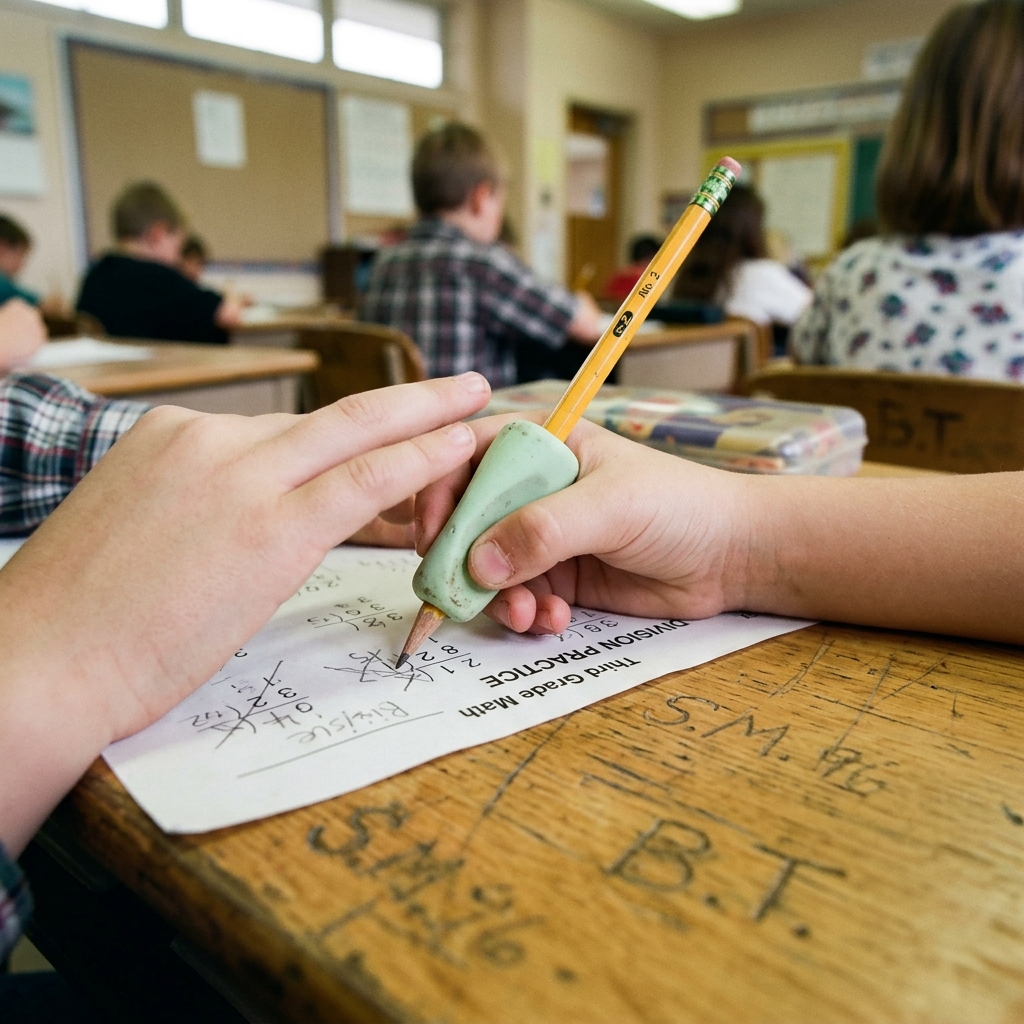
21. The squishy rubber pencil grip. A medical device. Worn only by children whose parents had been told something by a teacher. Visible from across the cafeteria. There was no recovery from this.
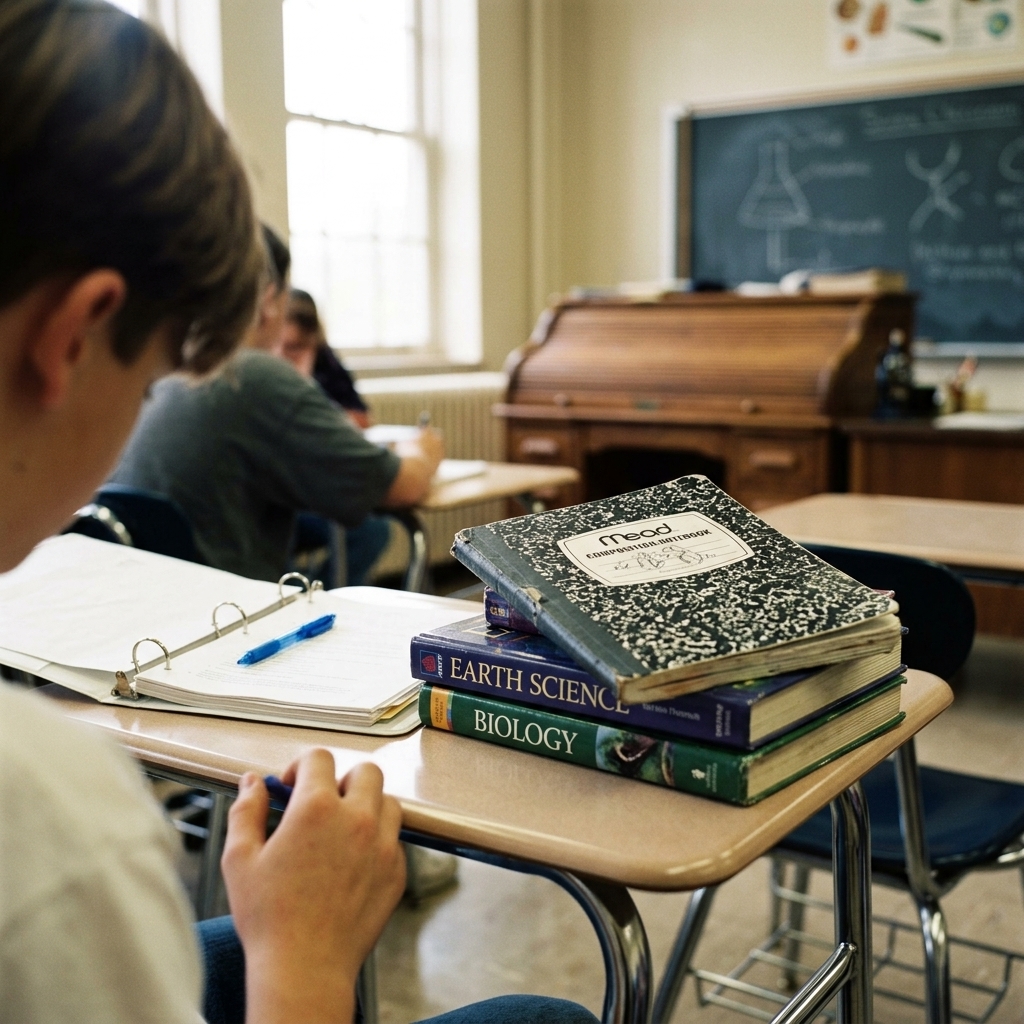
20. The Mead Composition Notebook (marble cover). Required by science teachers. Wielded by no one with status. Its primary use was being shoved into a backpack with a juice box that had a slow leak.
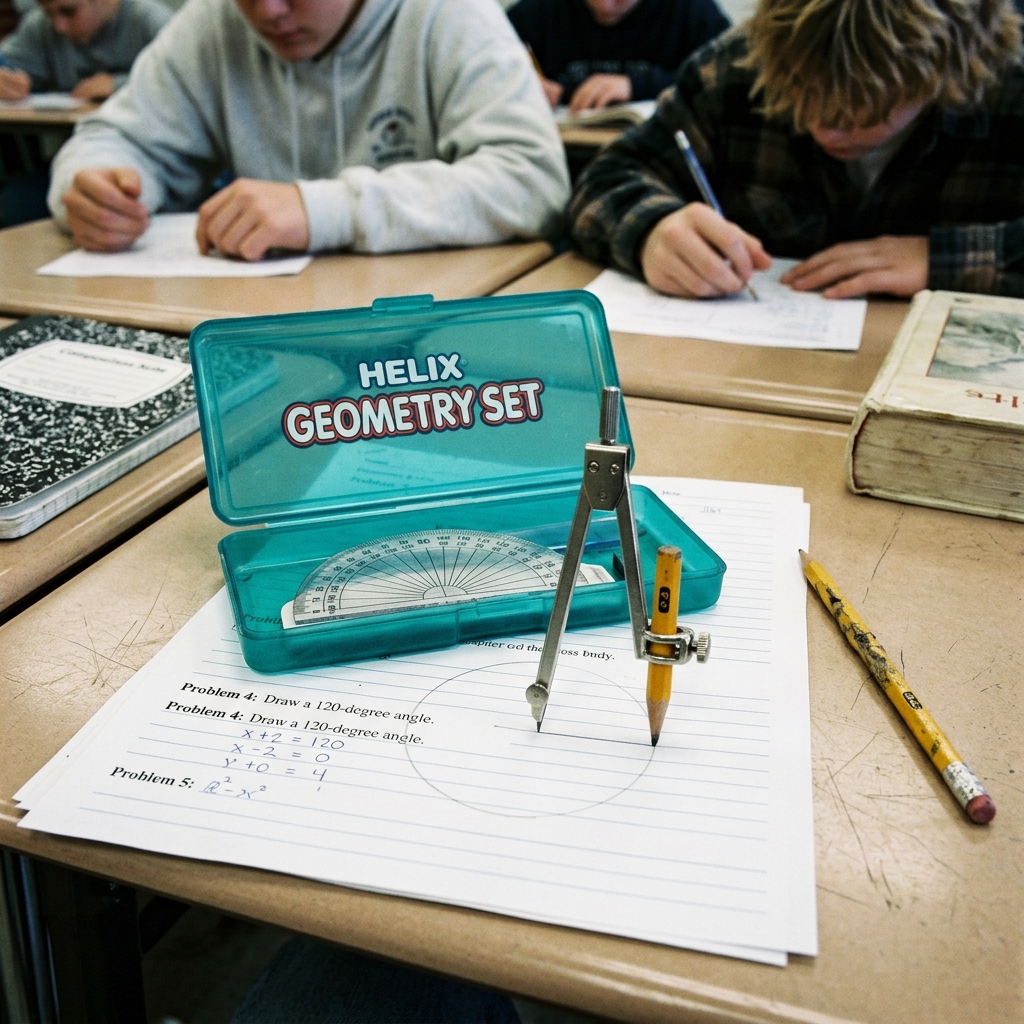
19. The protractor-and-compass set. Sold as a unit. Used in geometry. Sharp enough to be confiscated but boring enough to never warrant the trip to the principal's office. A failure on both axes.
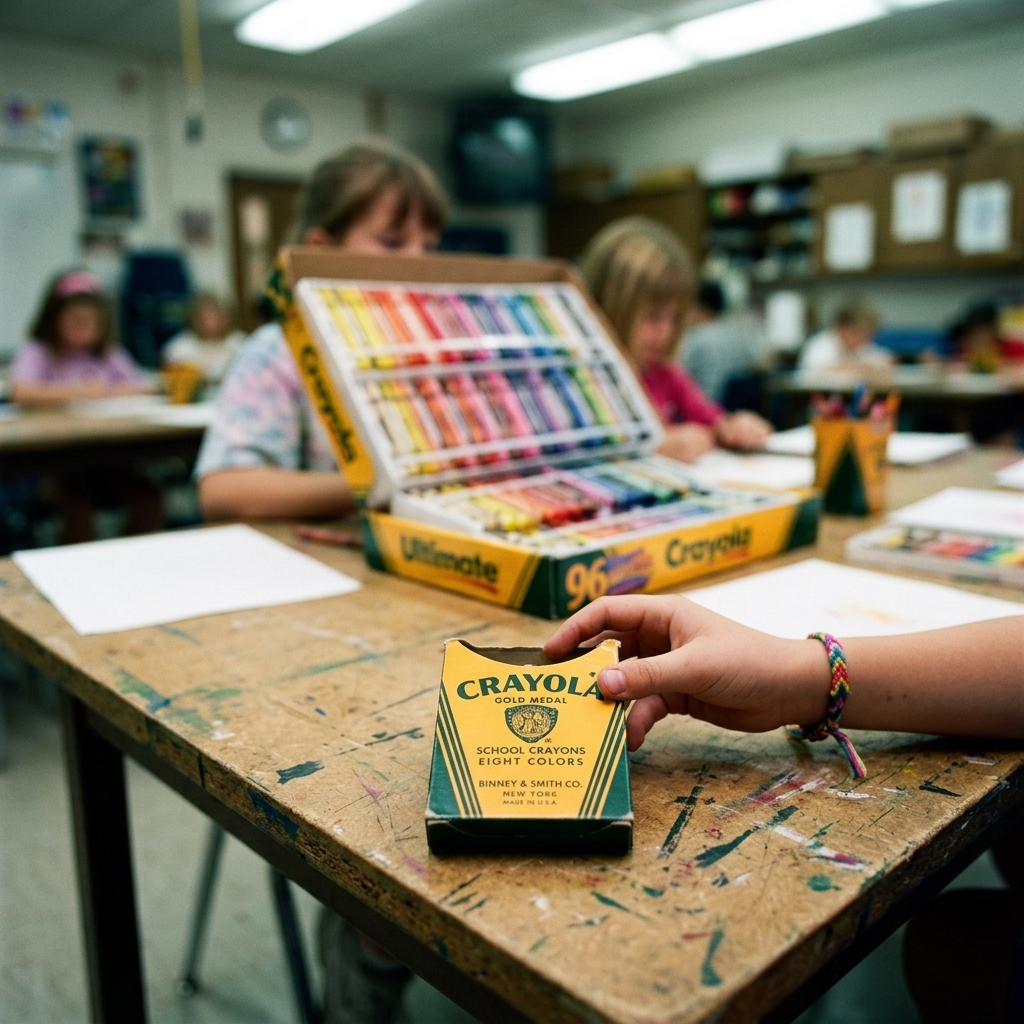
18. The 8-count Crayola box. This said two things: your parent went to the drugstore instead of the school-supply aisle, and they did not read the list. The 8-count was for toddlers. By third grade, this was social suicide.
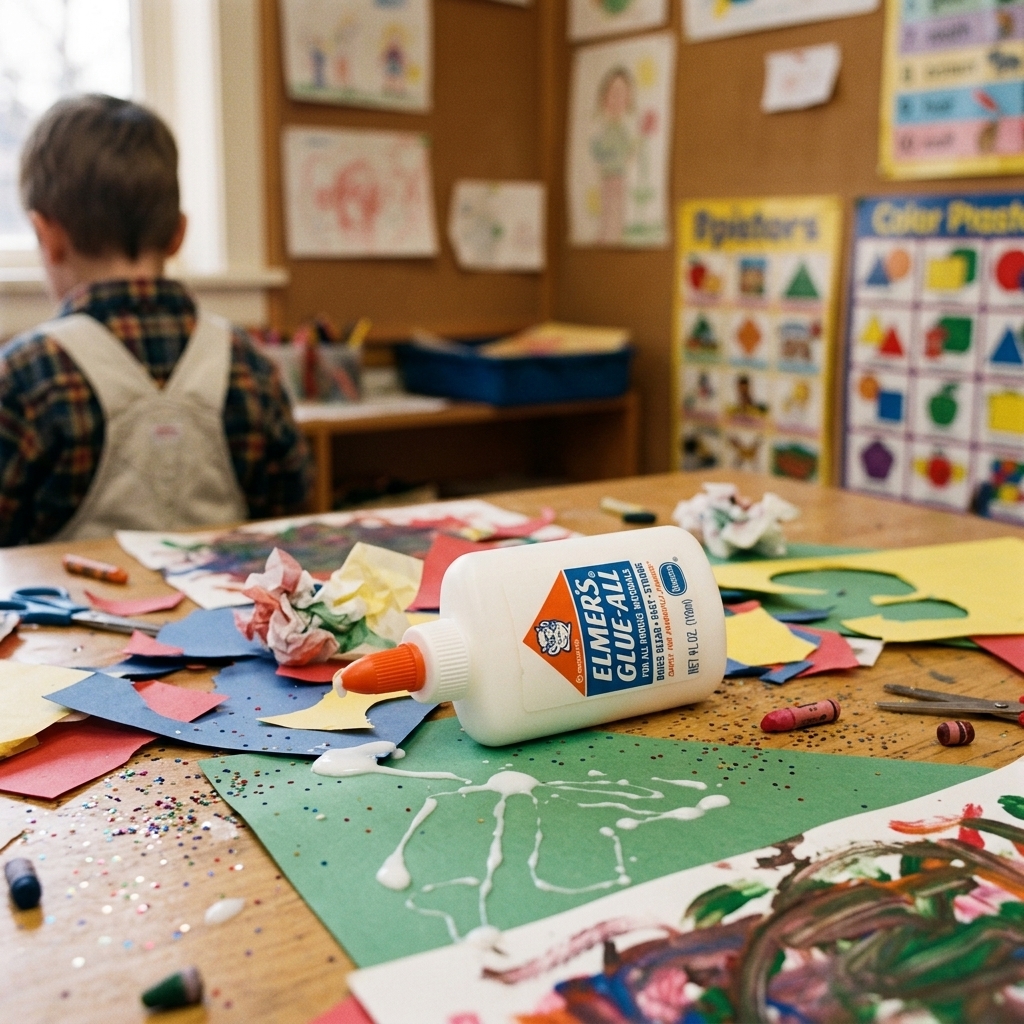
17. The orange-cap glue bottle. It clogged in the second week of school. It did not glue things. It made paper damp. The glue stick existed and was better and your parents bought the bottle anyway.
The low-mid: functional, forgettable
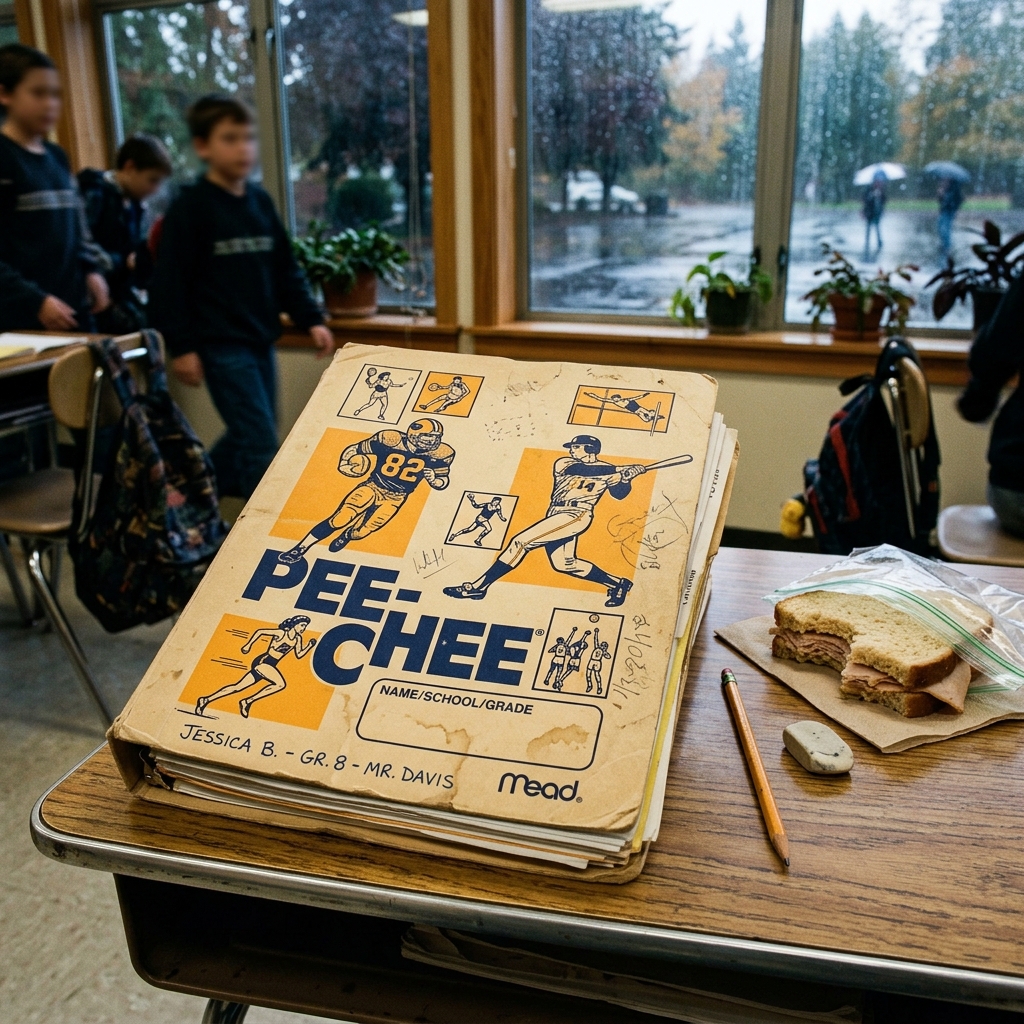
16. The Pee-Chee folder. Default issue on the west coast. Tan, with athletes printed in two-tone. Not embarrassing. Not a flex. The vanilla ice cream of folders.
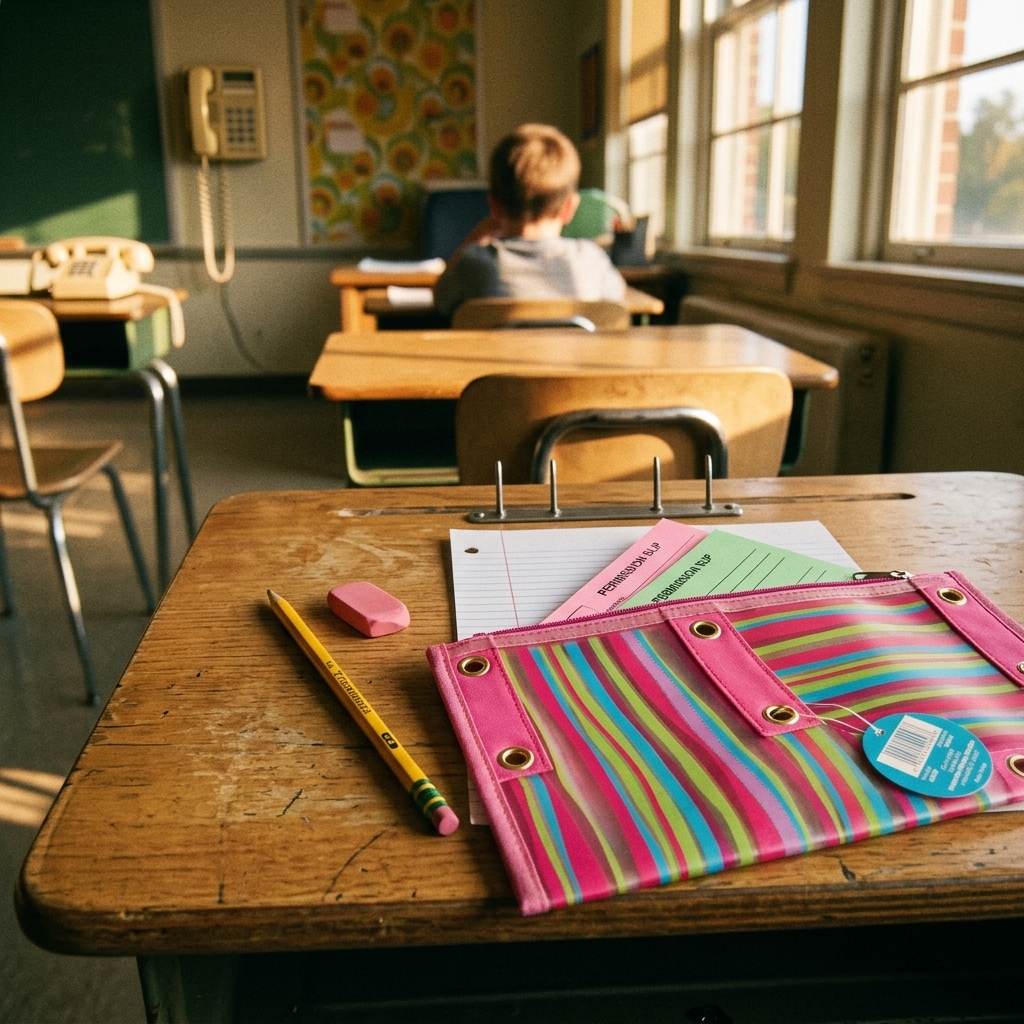
15. The two-pocket folder with metal prongs. Sold in 8-packs at Walmart. Provided structure. Held a single book report and one permission slip. Earned no points and lost no points.
14. The generic backpack from a discount store. The shoulder straps were too thin and the zipper failed in November. Acceptable in grades K-2. Embarrassing by grade 4. By grade 6, a social tell that lasted the year.

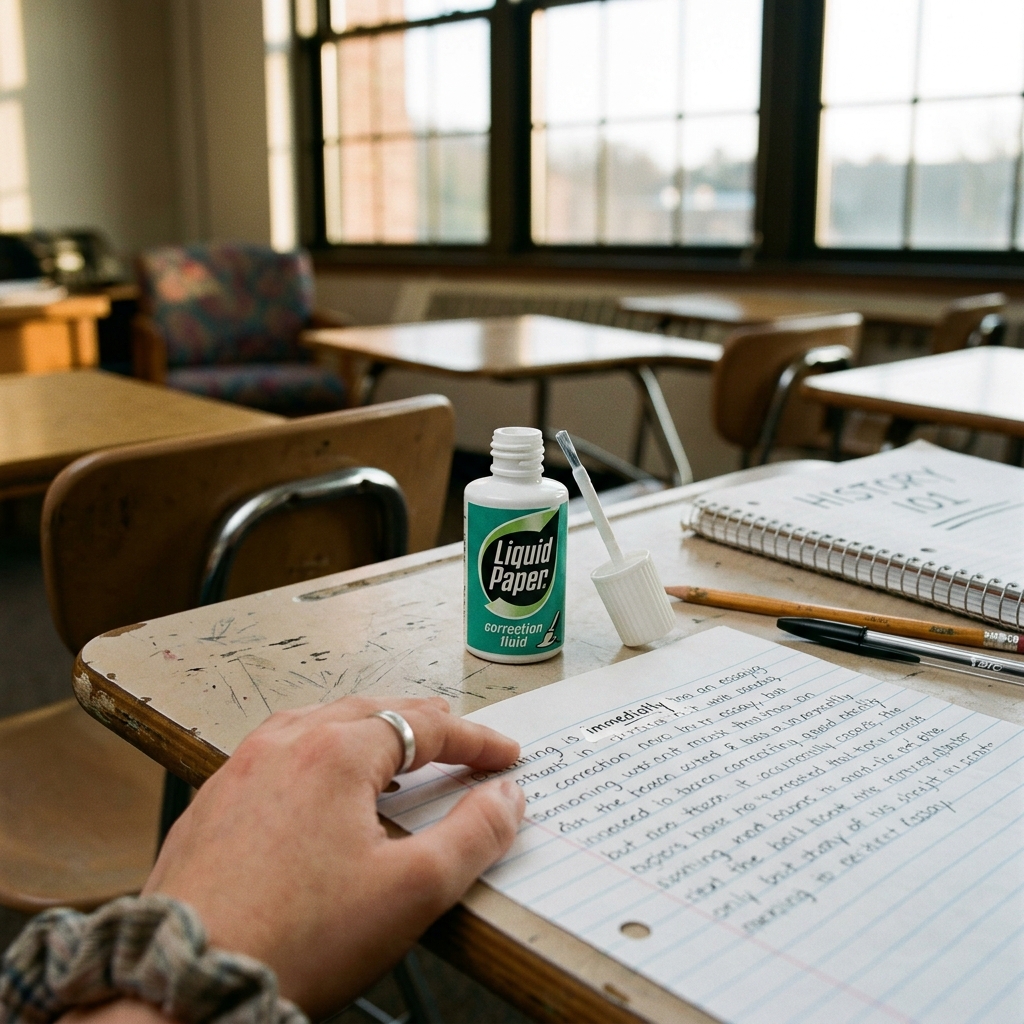
13. Liquid Paper. Required by every essay teacher. Used by every student. Spilled in every pencil case. Smelled like a substance you would later learn was not safe to inhale. Neutral status — utility belt of the social order.
The mid: functional flex
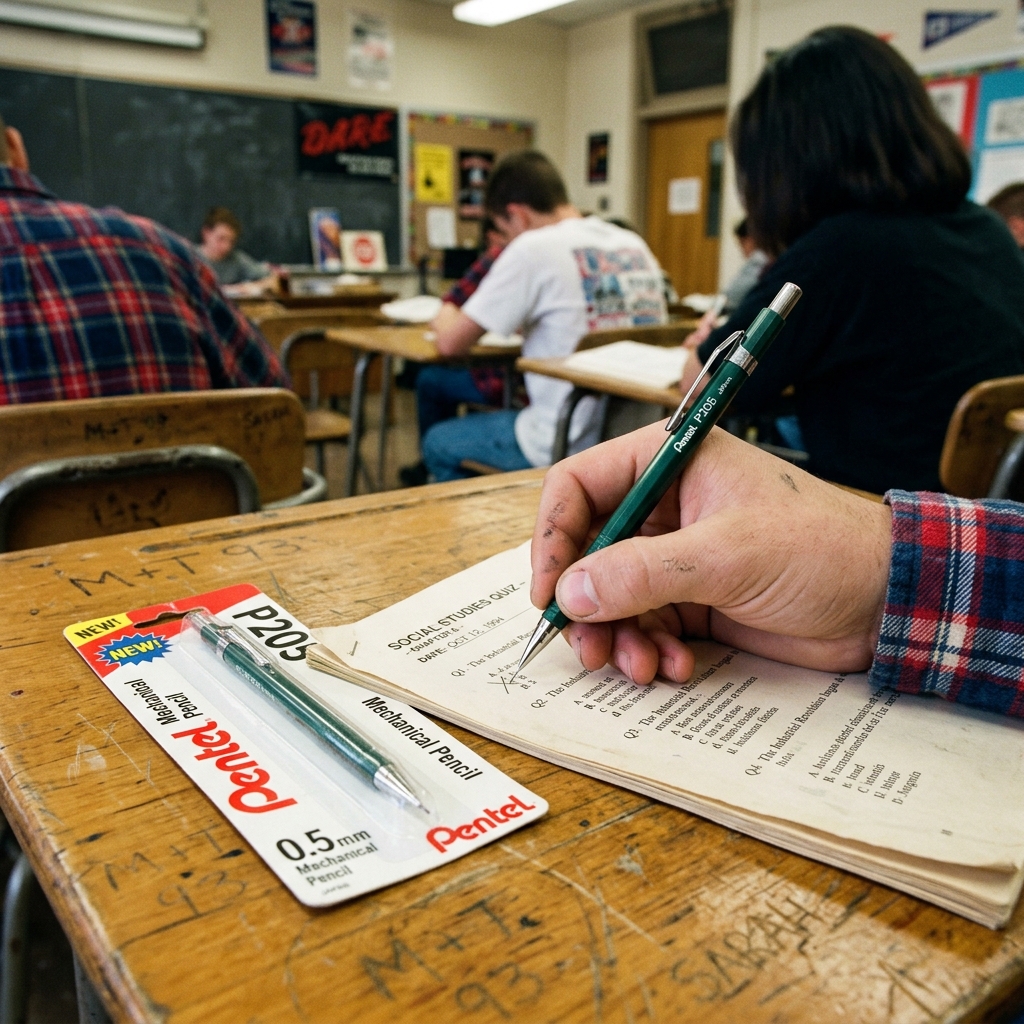
12. The mechanical pencil (Pentel P205 or BIC Velocity). A real one. Refillable. Carried the lead in a stripe down the side. You did not lend this out. The first social-order item where the upgrade mattered: a Pentel was a Pentel; a clear plastic knockoff from the drugstore was not.
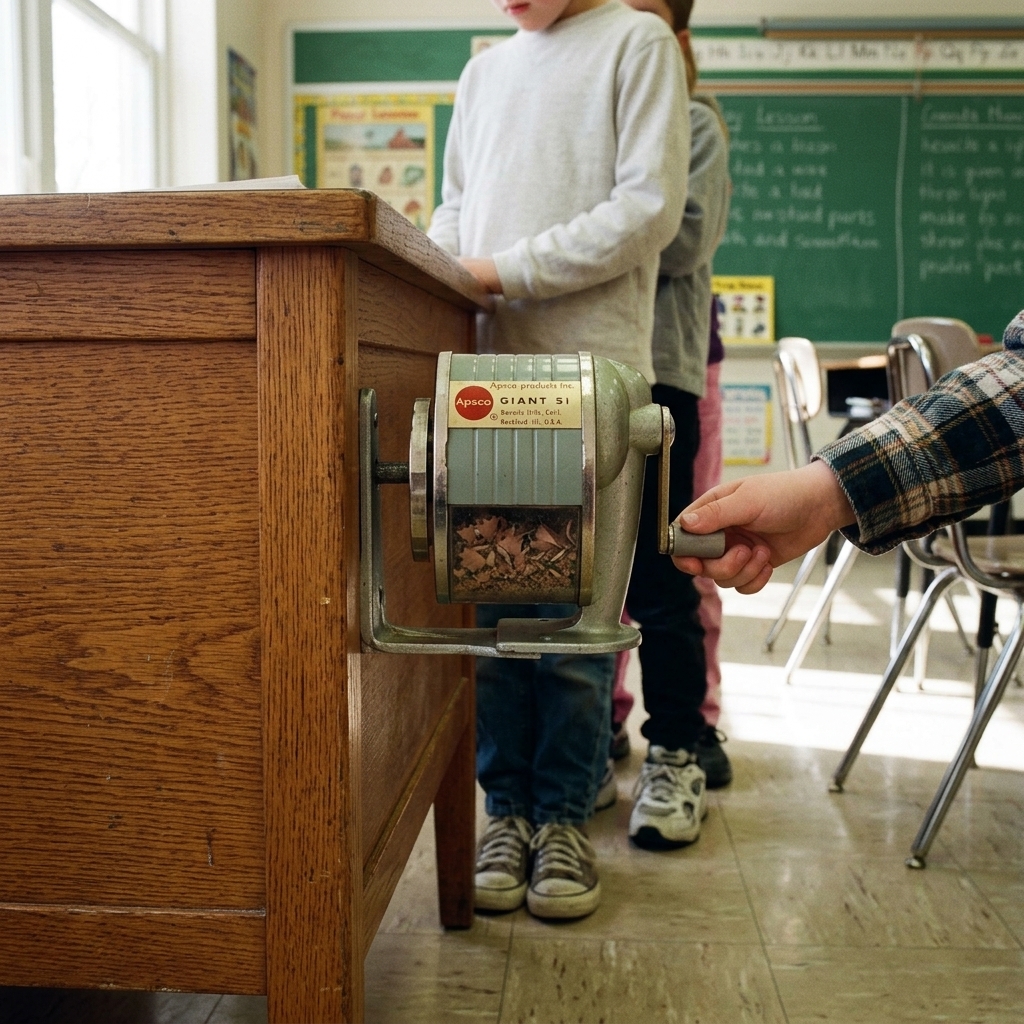
11. The clamp-on pencil sharpener with the rubber bumper. Bolted to the side of the desk. Operated with a hand crank. Sounded like a coffee grinder. Whoever sat next to one had power in the form of being able to ignore the line at the wall-mounted one. The teacher's pet status was downstream of this seat assignment.
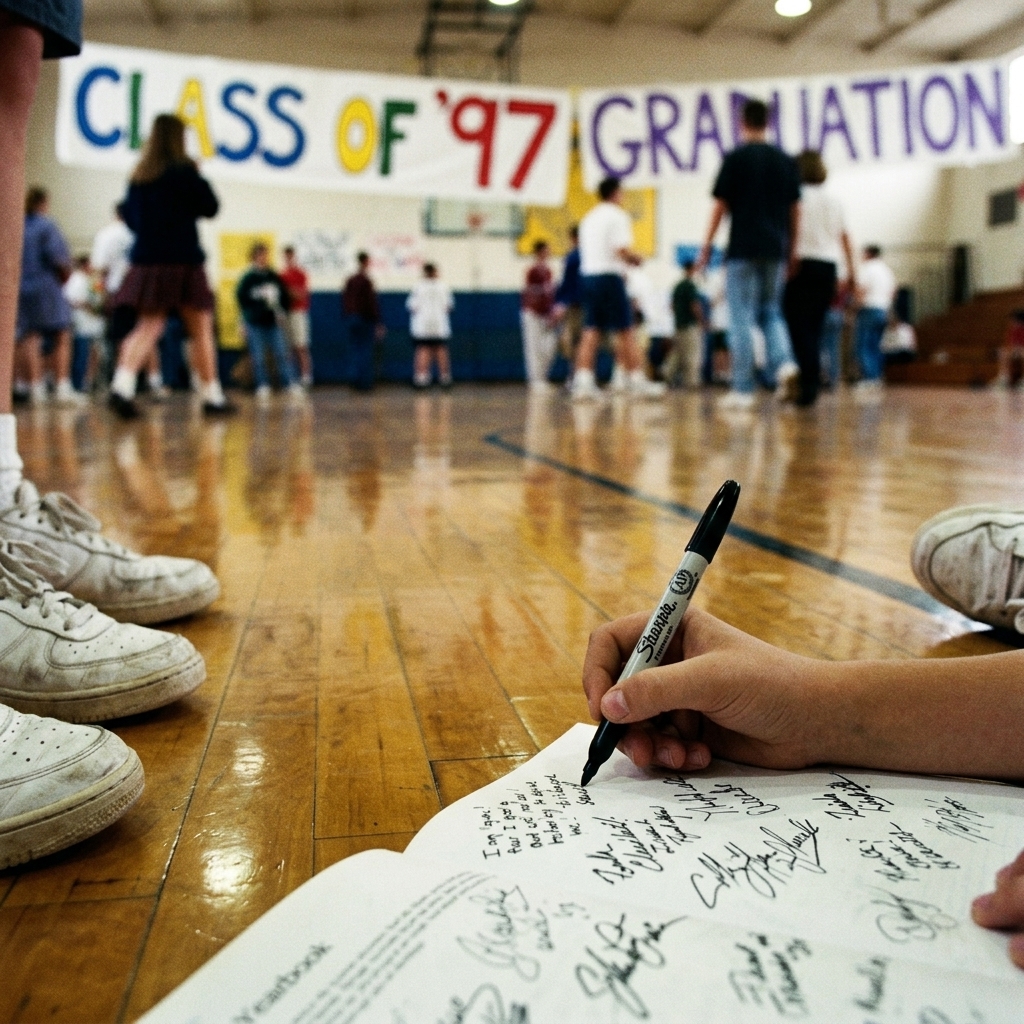
10. The Sharpie. Officially banned in most classes. Owned by everyone with status. Used to label binders, color in shoes, and sign yearbooks in May. The contraband was the flex.
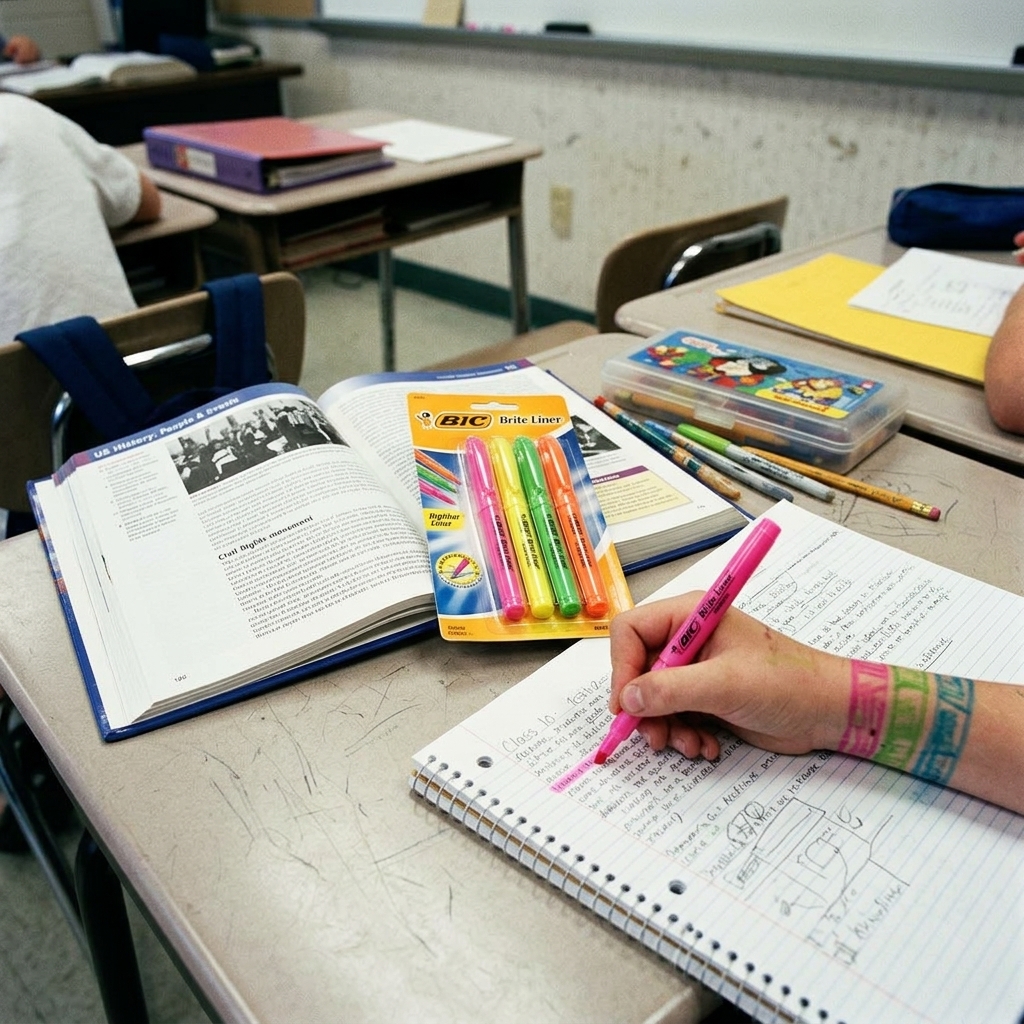
9. Highlighters (a 4-pack of Crayola or BIC Brite Liner). Used 60% on paper, 40% on the inside of your wrist to draw fake wristbands. Pink had higher status than yellow. Green was the chaos color. Orange was a mistake.
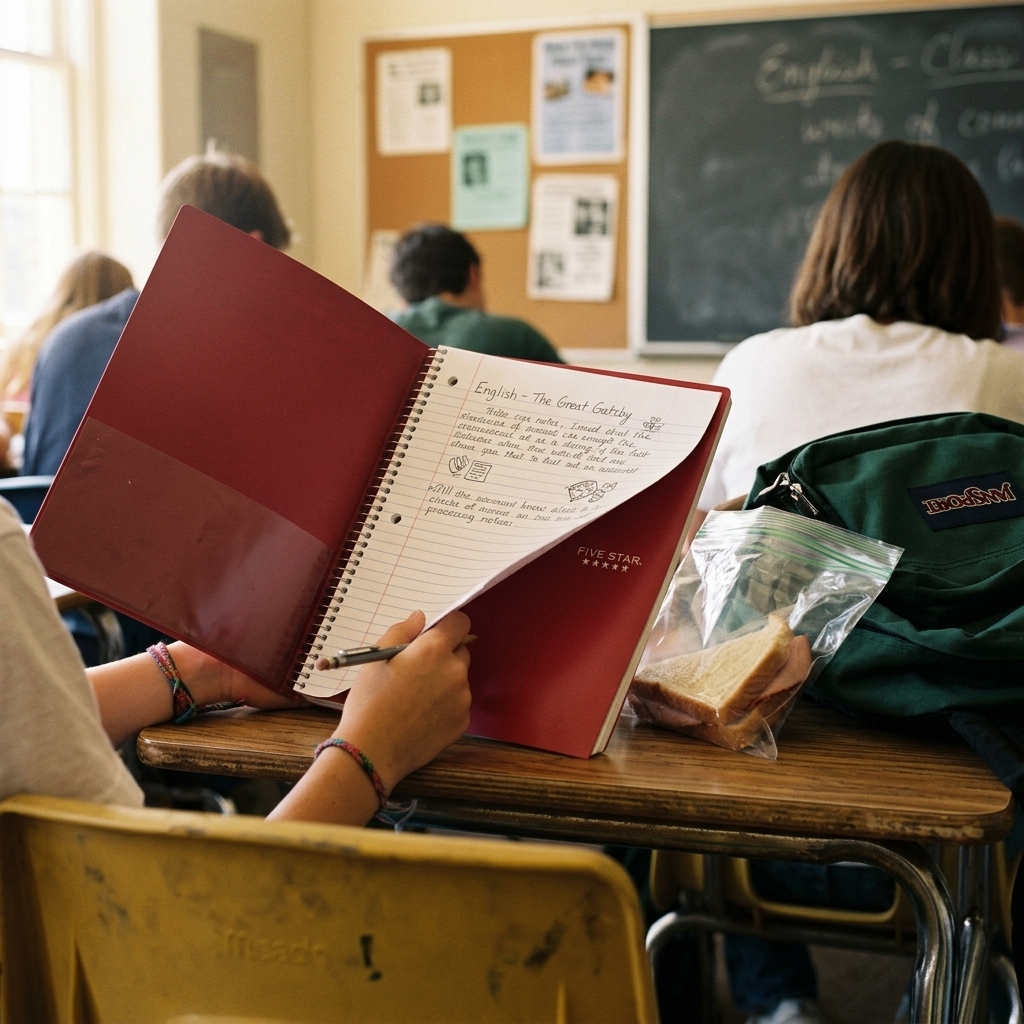
8. The Five Star notebook. Spiral-bound, plastic-coated cover, three subjects in one. The middle-class sedan of 90s notebooks. Reliable, defensible, not a story. Showed you understood the assignment.
The mid-high: signal
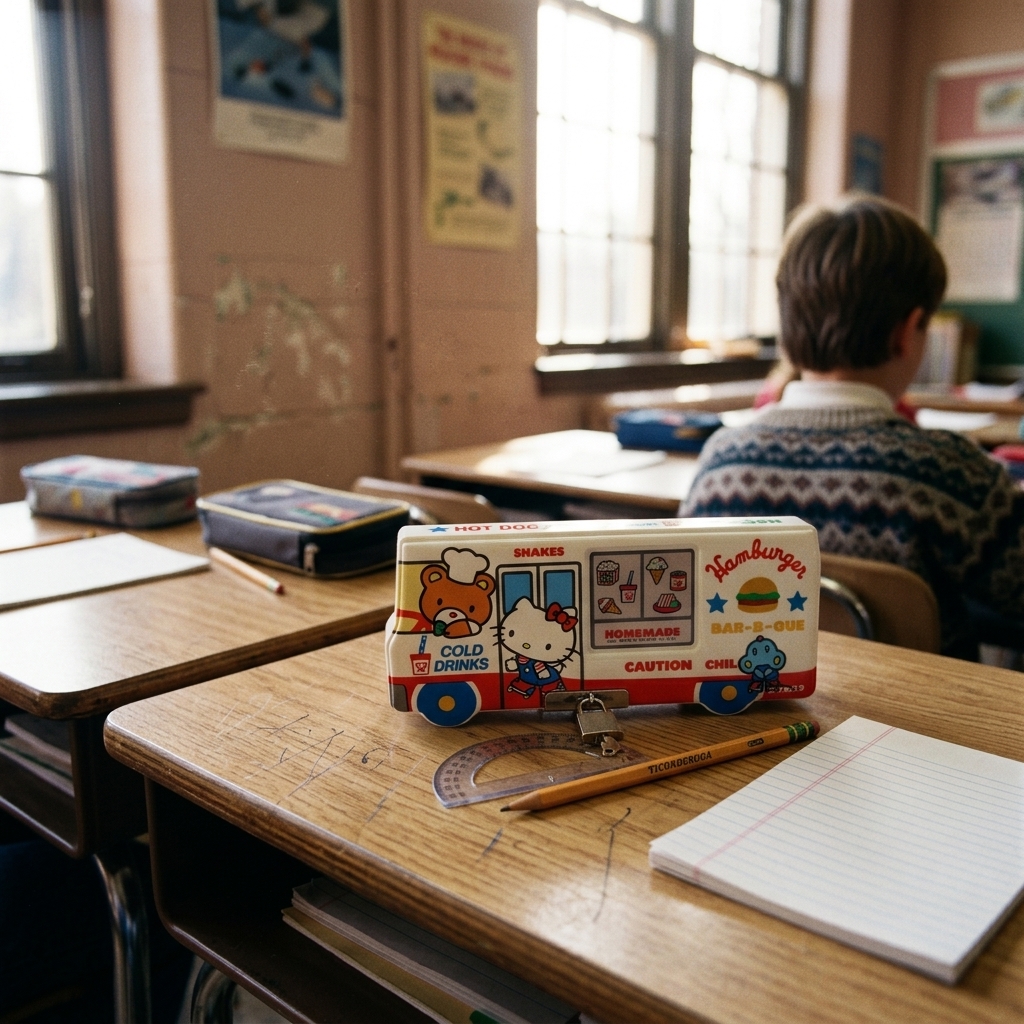
7. The Sanrio pencil case (Hello Kitty / Keroppi / Badtz-Maru). Imported pricing, plastic that smelled like a specific factory in Japan. Came with a tiny lock that did nothing. Lock was the point. Owning one said your parent had been to a mall with a Sanrio store, which meant they had been to a real mall, which was a class signifier.
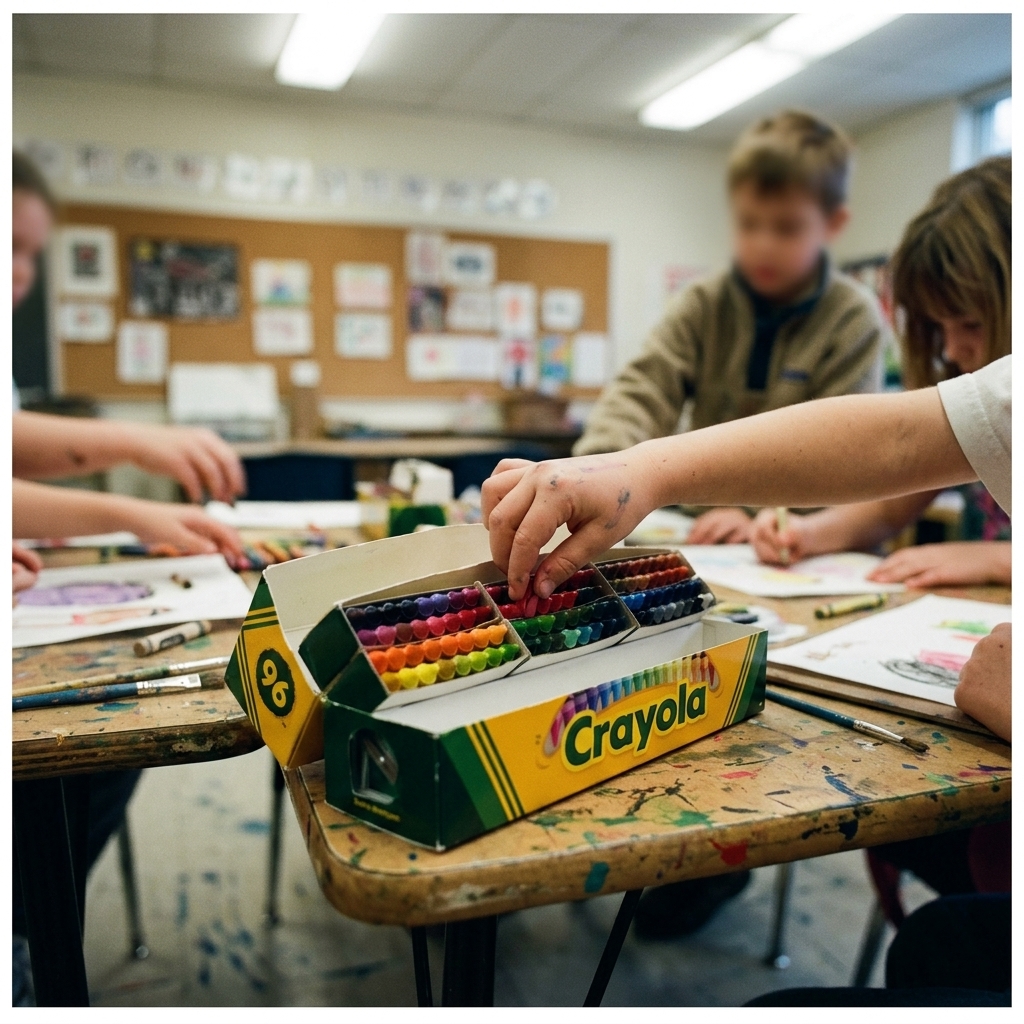
6. The Crayola 96-count crayon box with the built-in sharpener. The sharpener barely worked. The box took up half a desk. The crayons included colors that did not exist in nature ("burnt sienna," "razzmatazz"). A pure flex. The kids with the 96-count did not let the kids with the 8-count borrow.
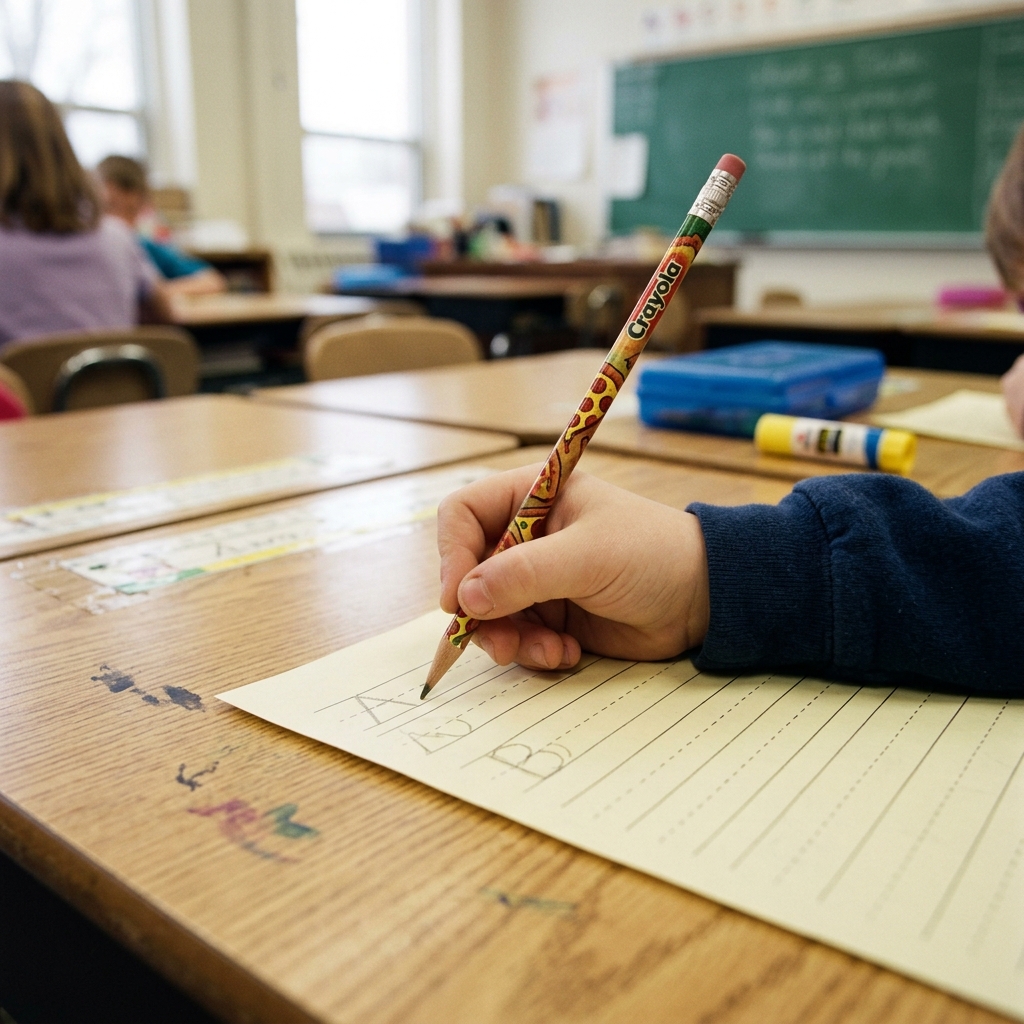
5. The Yikes! pencil. Pre-decorated, themed, sold by Crayola for $0.50 more than the plain ones. Came in patterns named "Pizza" and "Outer Space." Functionally identical to a normal pencil. Socially, a different category of object. The Yikes! pencil told the room: my parent let me pick.
The high: status
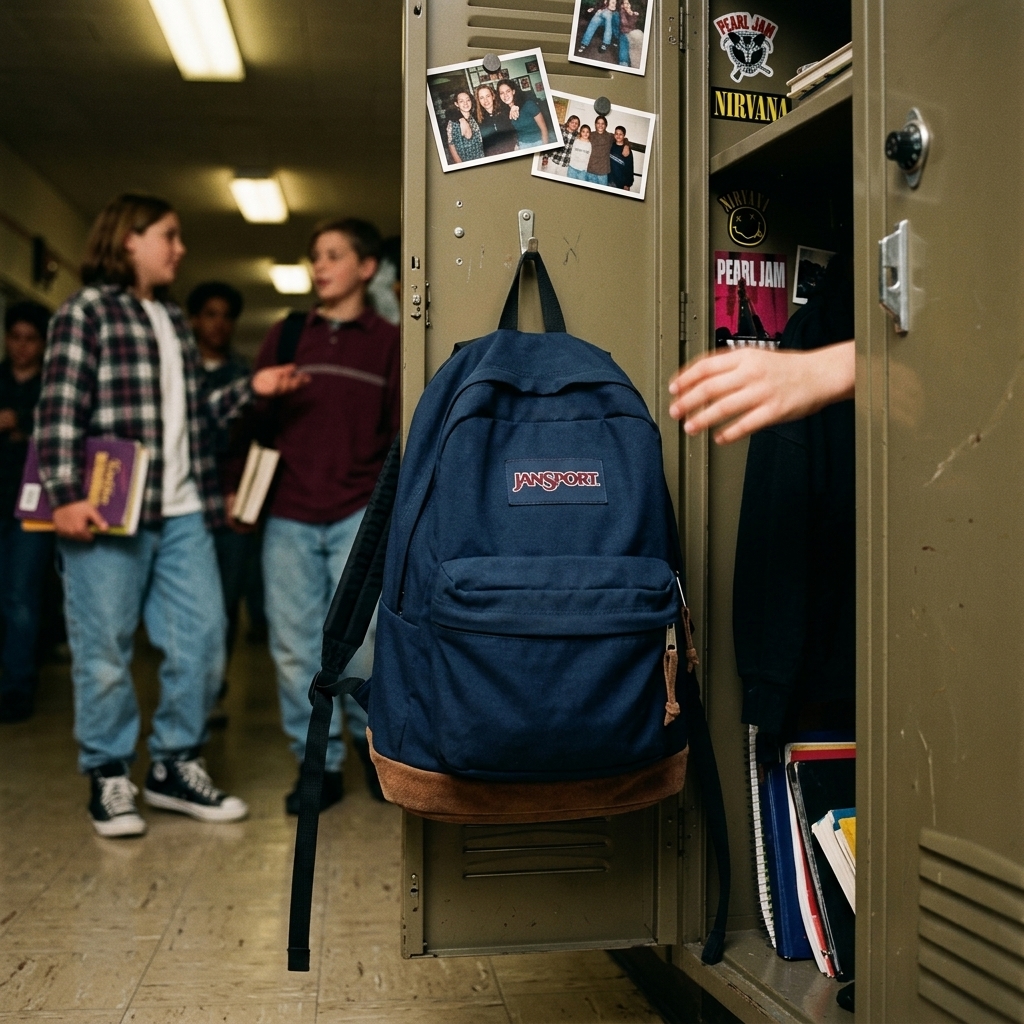
4. The JanSport backpack. Single most class-defining object in 90s American school culture. Big Student or SuperBreak model. The straps lasted four years. The lifetime warranty was a brag. A real JanSport vs. a "looks like a JanSport" was visible from twenty feet, and we all looked.
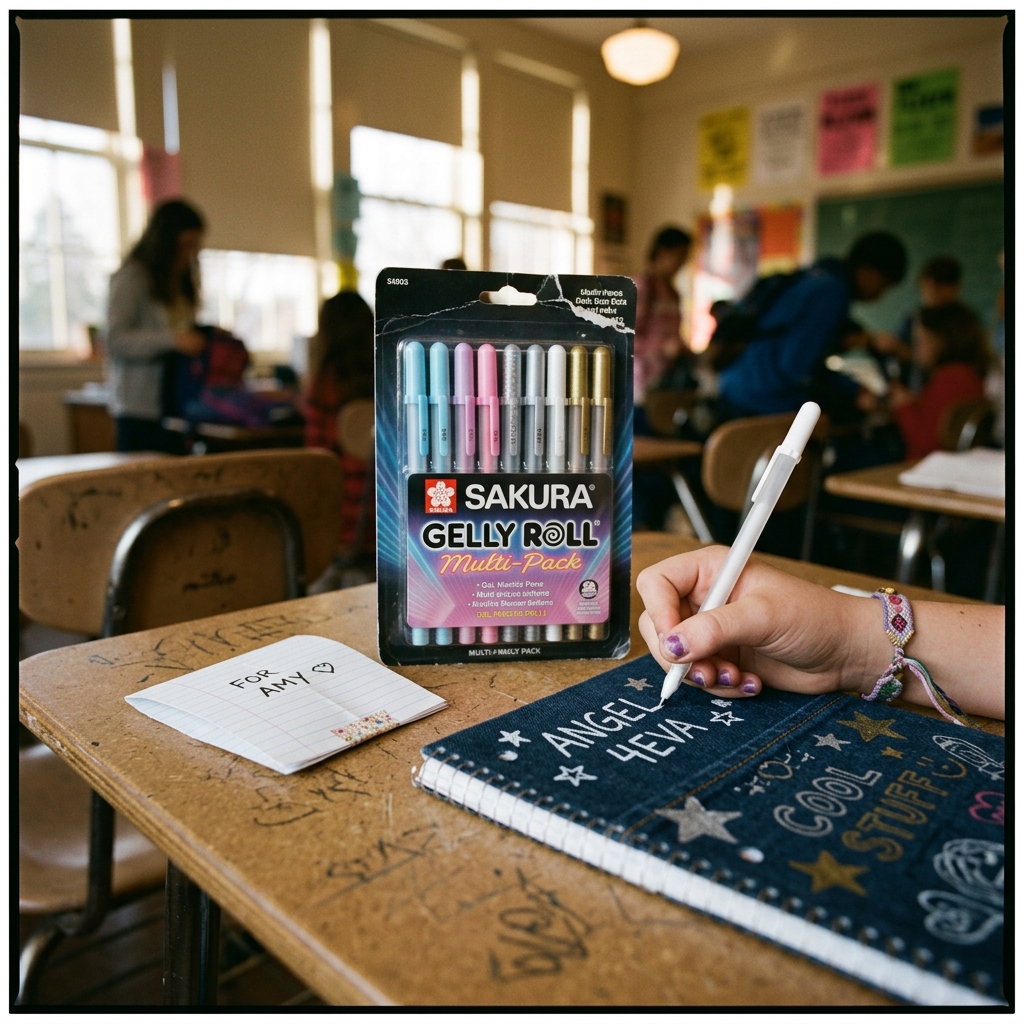
3. The Gelly Roll multi-pack (or Milky Gel Pens). Sakura made the white one that wrote on dark paper. Sakura made the silver one that wrote on a JanSport. The pack of 10 was wealth. The pack of 20 was an institution. The girls who owned the pack of 20 had a small economy around them.
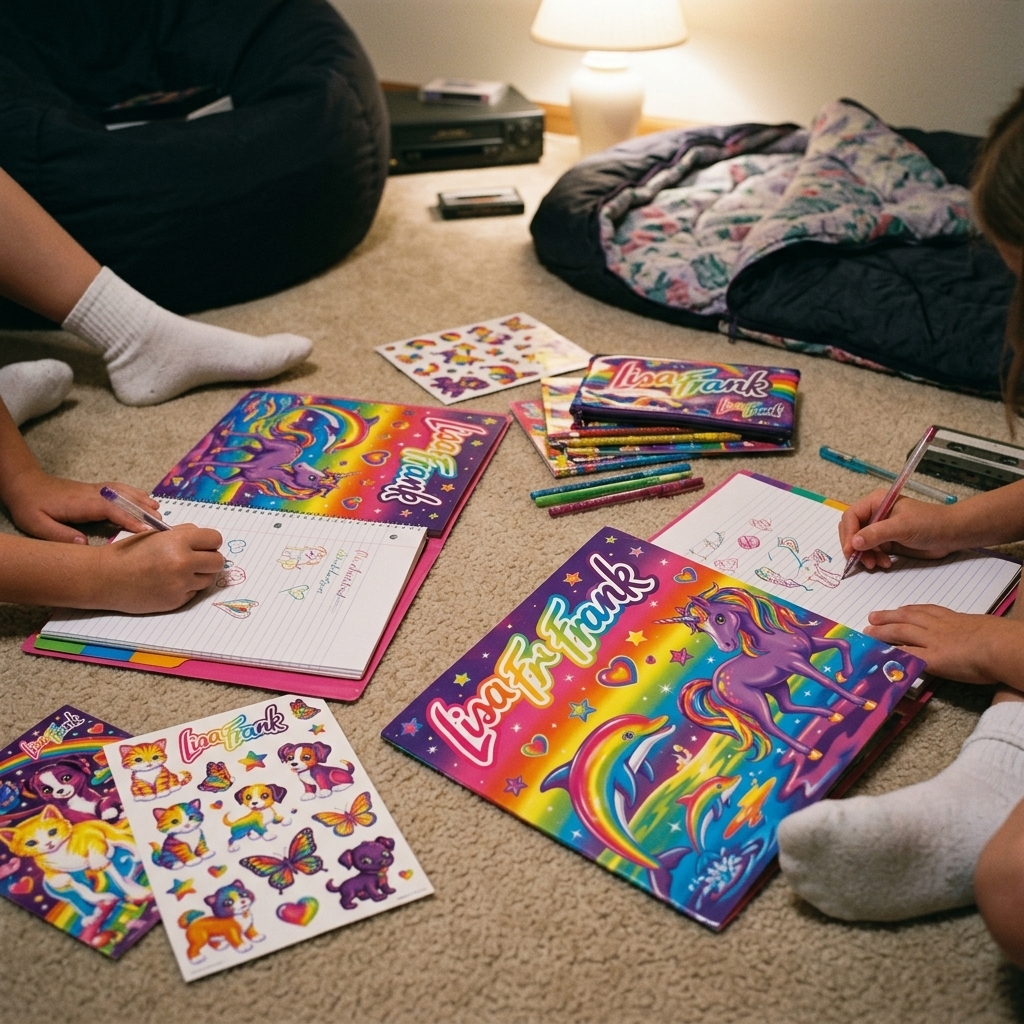
2. Lisa Frank, all of it. The folders, the binder dividers, the trapper-style organizers, the stickers, the stationery sets. Lisa Frank was not a product line; it was a worldview. Owning a Lisa Frank binder set was a class above the Sanrio kids and a parallel universe from the JanSport kids — a separate ecosystem with separate hierarchy. (TM watch: the brand was very real and is still very litigious. Editorial mention is fine; design is a different story.)
The top: you held court
1. The Trapper Keeper. Three-ring binder with a Velcro-sealed flap, designed by Mead, in production from 1978 through every year of this article's relevance. The dolphin/space/horse/abstract-rainbow cover was a personality cartridge. Owning a Trapper Keeper meant your parent had read the supply list, gone to the right aisle, and approved a $14 binder when a 99¢ one would have functioned. It meant they were paying attention. The Velcro made a specific sound when you opened it. Other kids heard that sound and knew where they ranked.
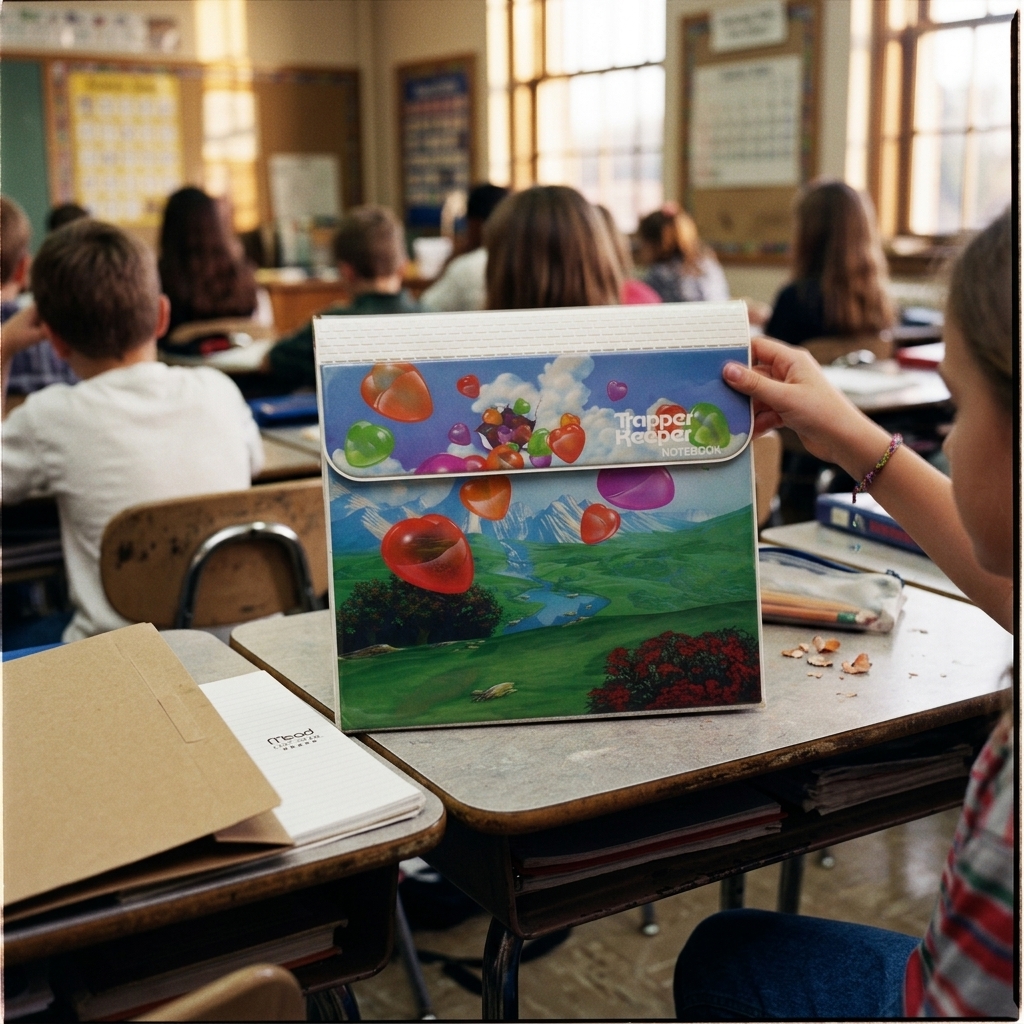
The Trapper Keeper has been in and out of production multiple times since. The current versions are not the same. The Velcro is wrong.
The 90s school-supply hierarchy was real, it was strict, and it was almost entirely invisible to the adults paying for it. The pencil case was the resume. The backpack was the salary. The Trapper Keeper was the corner office.
Every year on the first day, an entire grade of kids redrew its social map based on what was in a 50-cent aisle at Walmart, and we all knew exactly what we were doing.
🖼️ The 90s school year, distilled to a wall print: The 90s Classroom House Rules — poster (coming soon)
More from the era: 37 discontinued 90s snacks, ranked and The 90s summer kid rules, written down.