
The 90s sleepover was not a hangout. It was a liturgy. It had fixed phases, unwritten enforcement, and a known sequence that every kid in America executed without anybody having to explain it. Deviating from the sequence was noticed. Skipping a phase broke the whole night.
This is the indoor sibling of the Summer Kid Rules. The Rules governed the daylight. The Ritual governed the dark. Both were transmitted orally and both have gone out of print.
We're writing the protocol down.
Phase 1: Arrival
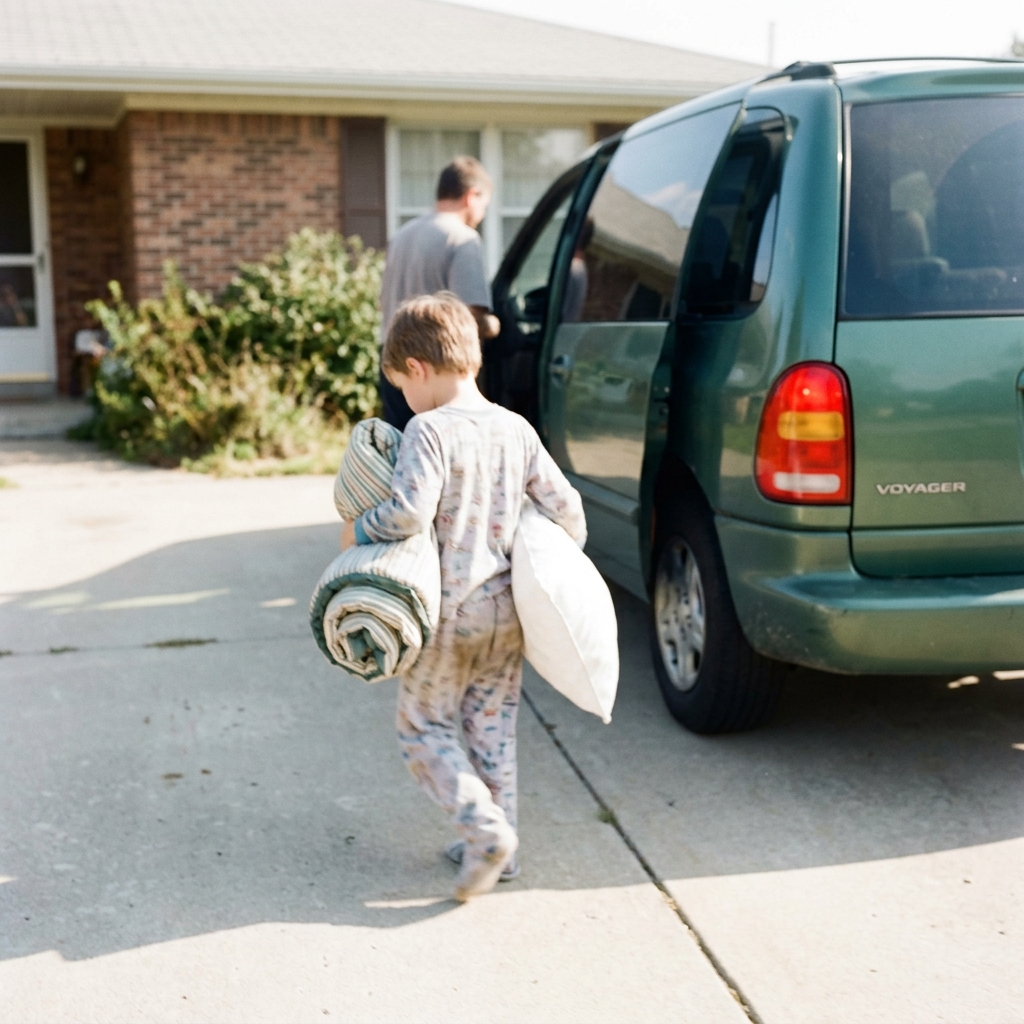
Step 1. The backpack is packed wrong, on purpose. A sleeping bag, a pillow that wouldn't fit in the bag and had to be carried separately under one arm, pajamas you would not actually wear, a toothbrush, and exactly one item of leverage — a Game Boy, a stack of Pogs, a VHS from home. You forgot a change of clothes. You always forgot a change of clothes. This was structural: forgetting clothes was the kid's way of committing to wearing yesterday's t-shirt home, which signaled the sleepover had counted.
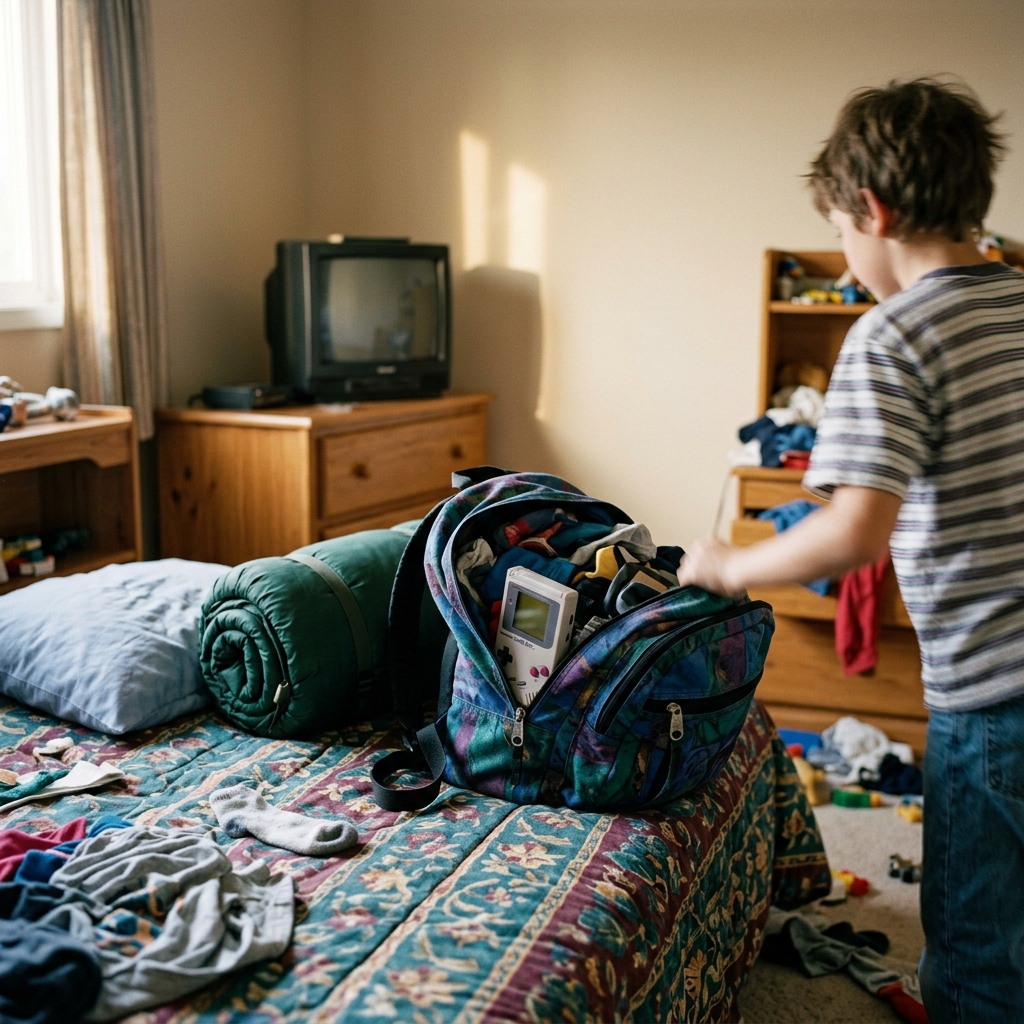
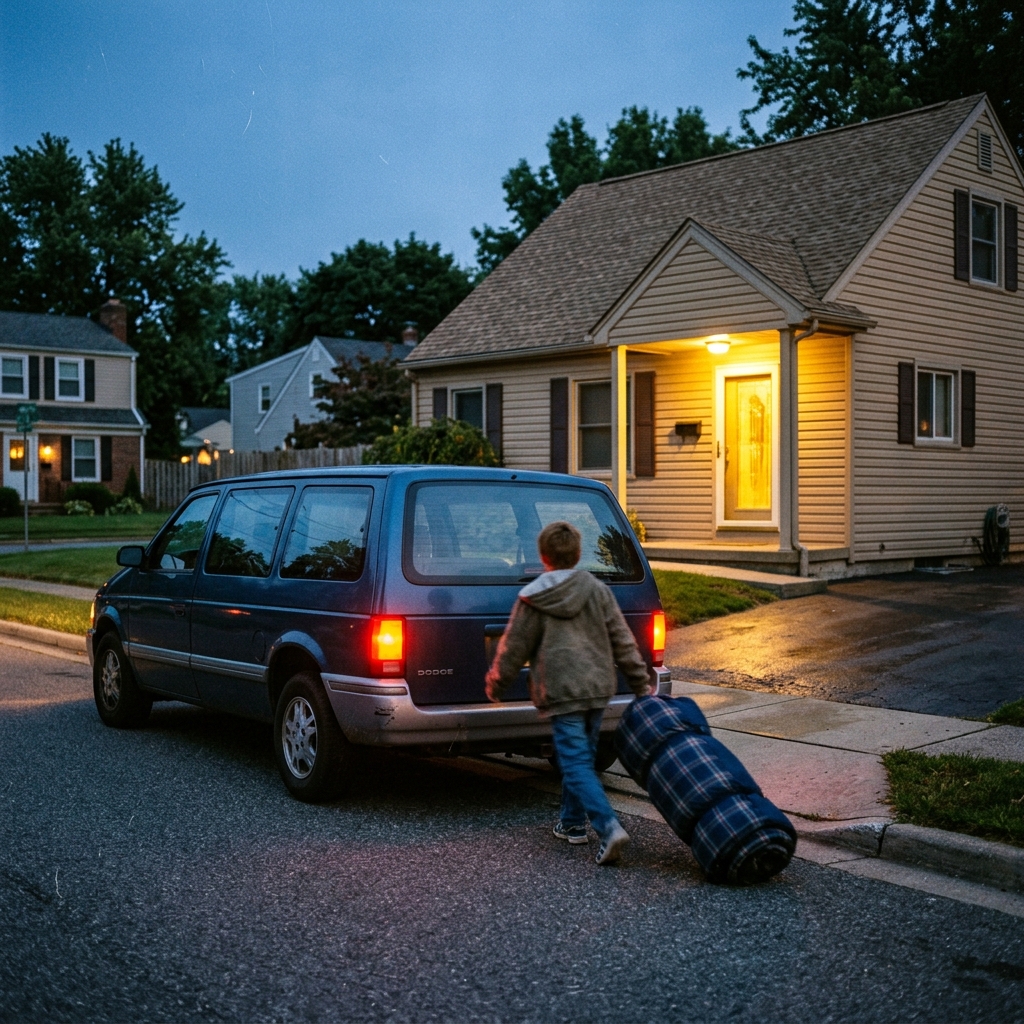
Step 2. The drop-off is two minutes long, maximum. Your parent stood in the doorway, said one sentence to the host parent ("call us if anything"), and left. There was no playdate intel exchange. There were no allergy notes. The host parent's job was to keep you alive until 10am. That was the entire contract.
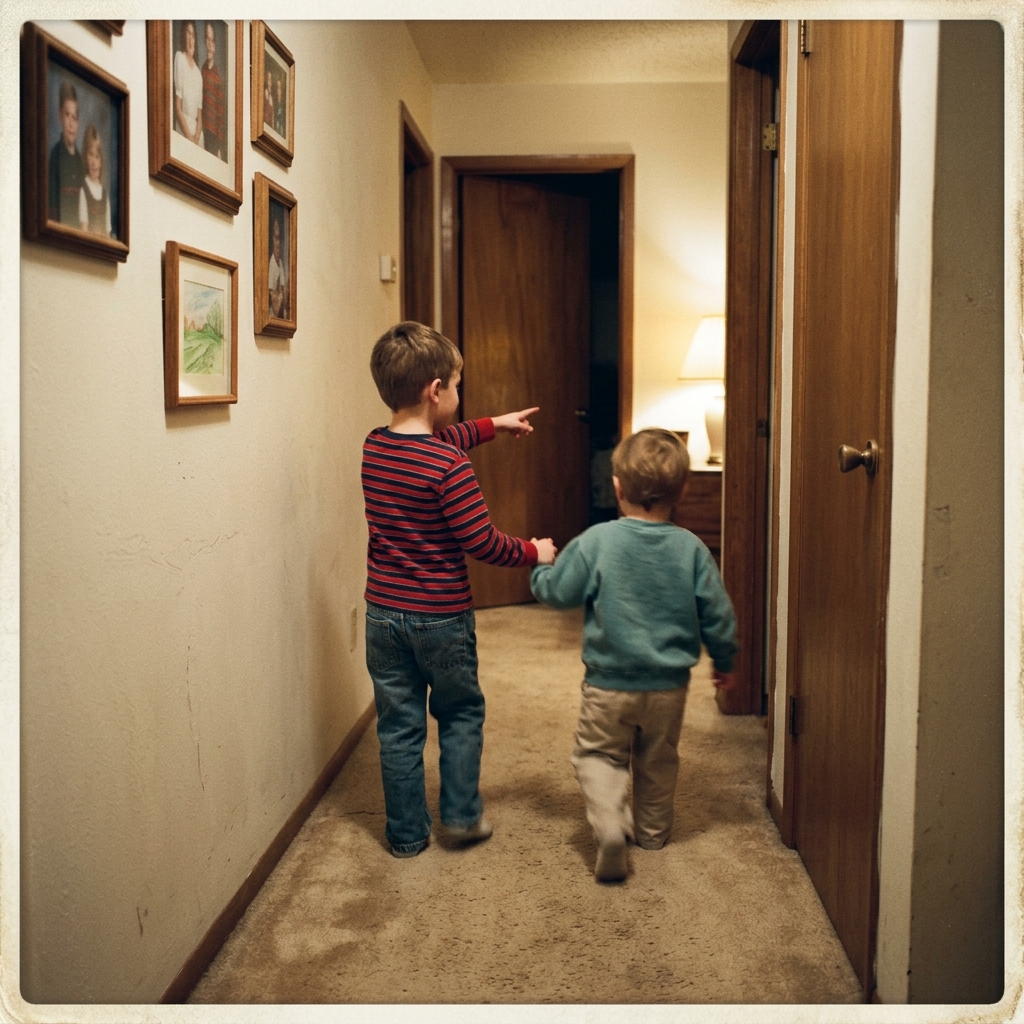
Step 3. The house tour, even if you'd been there a hundred times. The host kid walked you through the kitchen, the basement, the bathroom you were allowed to use, and the bedroom you were not allowed to enter (older sibling's). This was a sovereignty ritual. It established that tonight, the house was the host's, not the parent's.
Phase 2: The Long Evening
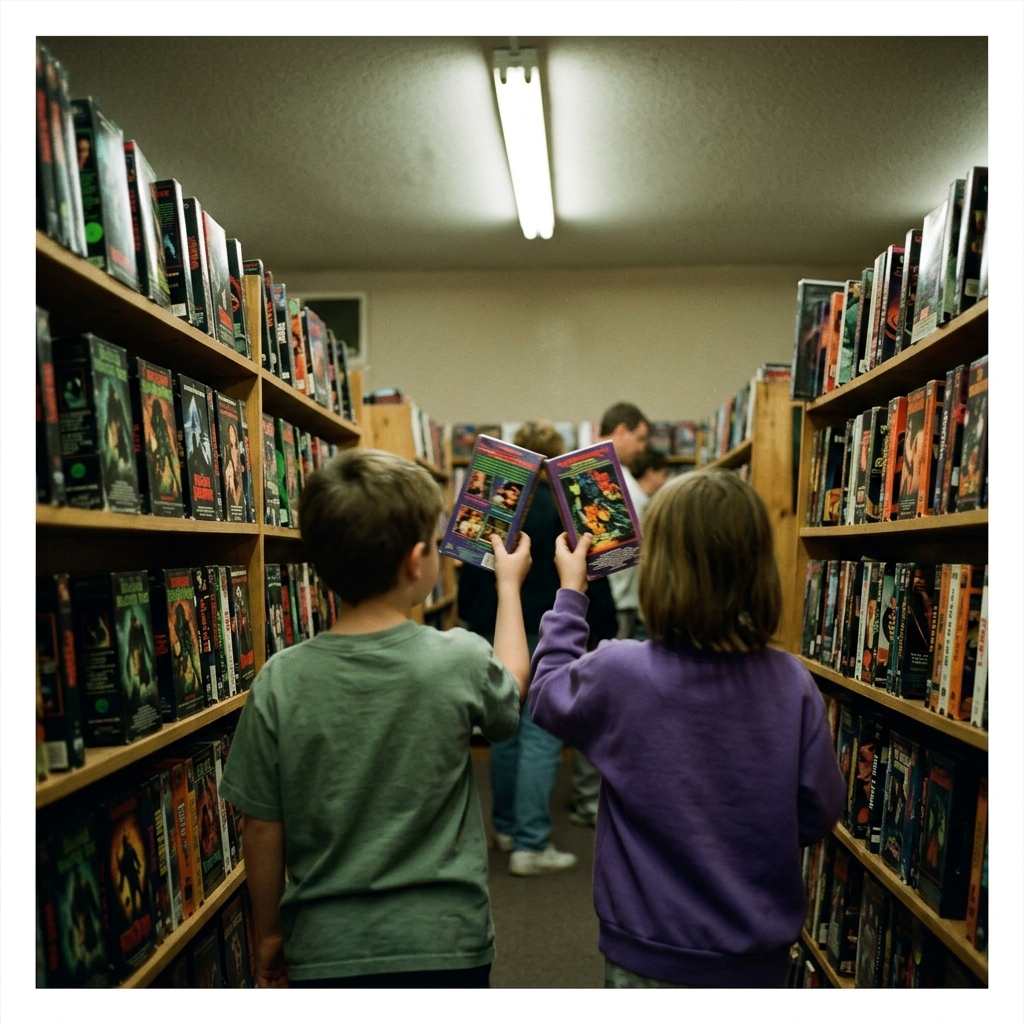
Step 4. The video store run. Piled into the back of a station wagon, no seatbelts, $11 in cash from the host parent, dispatched to Blockbuster or the local equivalent with a 40-minute window. This was the most important errand of the entire night and it was run entirely by children.
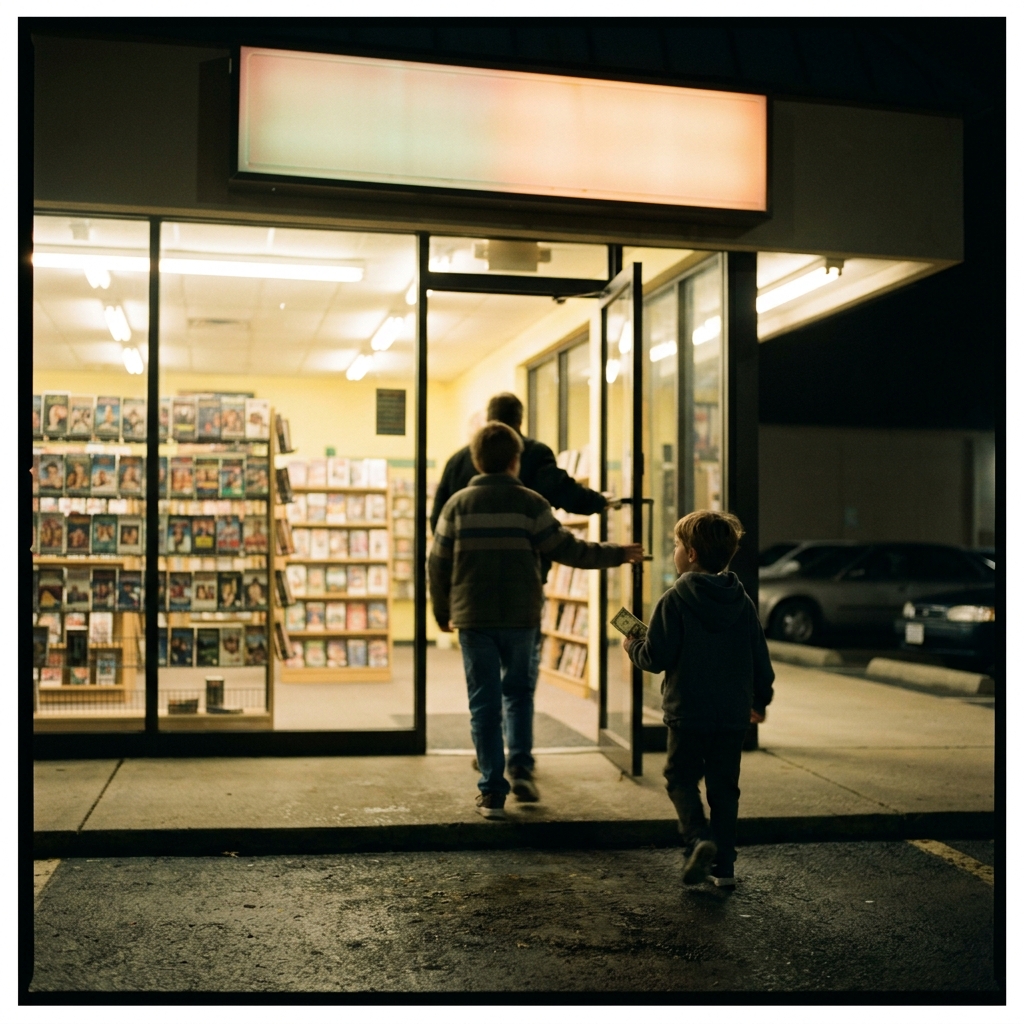
Step 5. The VHS negotiation. Two kids wanted the same horror movie they were not old enough to rent. One kid wanted Space Jam for the fourth time. One kid wanted something with a topless scene whose existence was rumored but unconfirmed. The negotiation took 25 of your 40 minutes and produced a compromise nobody actually wanted: one comedy (safe pick), one horror (the host kid's older cousin had vouched for it), and a bag of microwave popcorn from the front rack. The clerk did not check IDs. The clerk did not care. The clerk was 19.
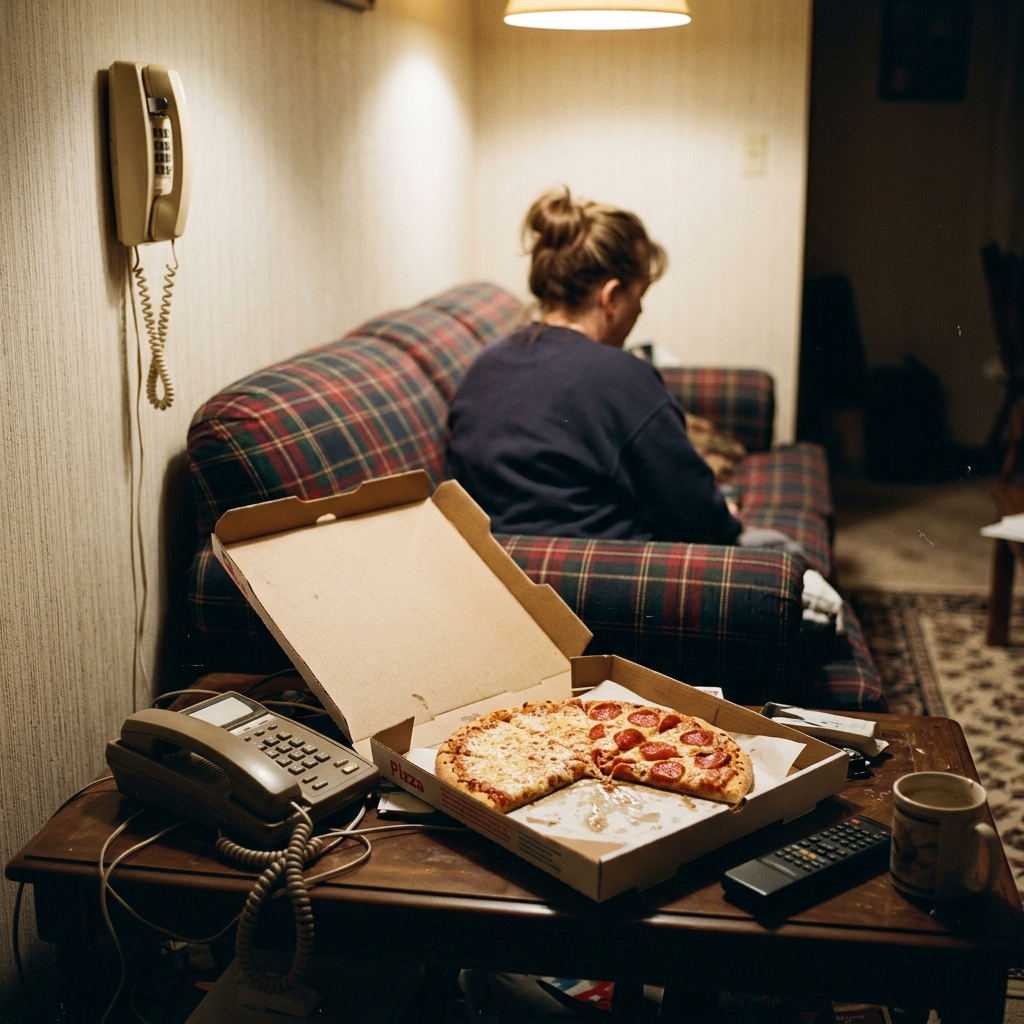
Step 6. The pizza order. One large, half pepperoni, half cheese, because the kid with the weird topping preference (mushrooms, olives, anything green) had been outvoted by Step 4 and knew it. The host parent placed the call from the corded kitchen phone. The pizza arrived in 35 minutes. The host parent paid. The kids did not say thank you because the kids were already in the basement.
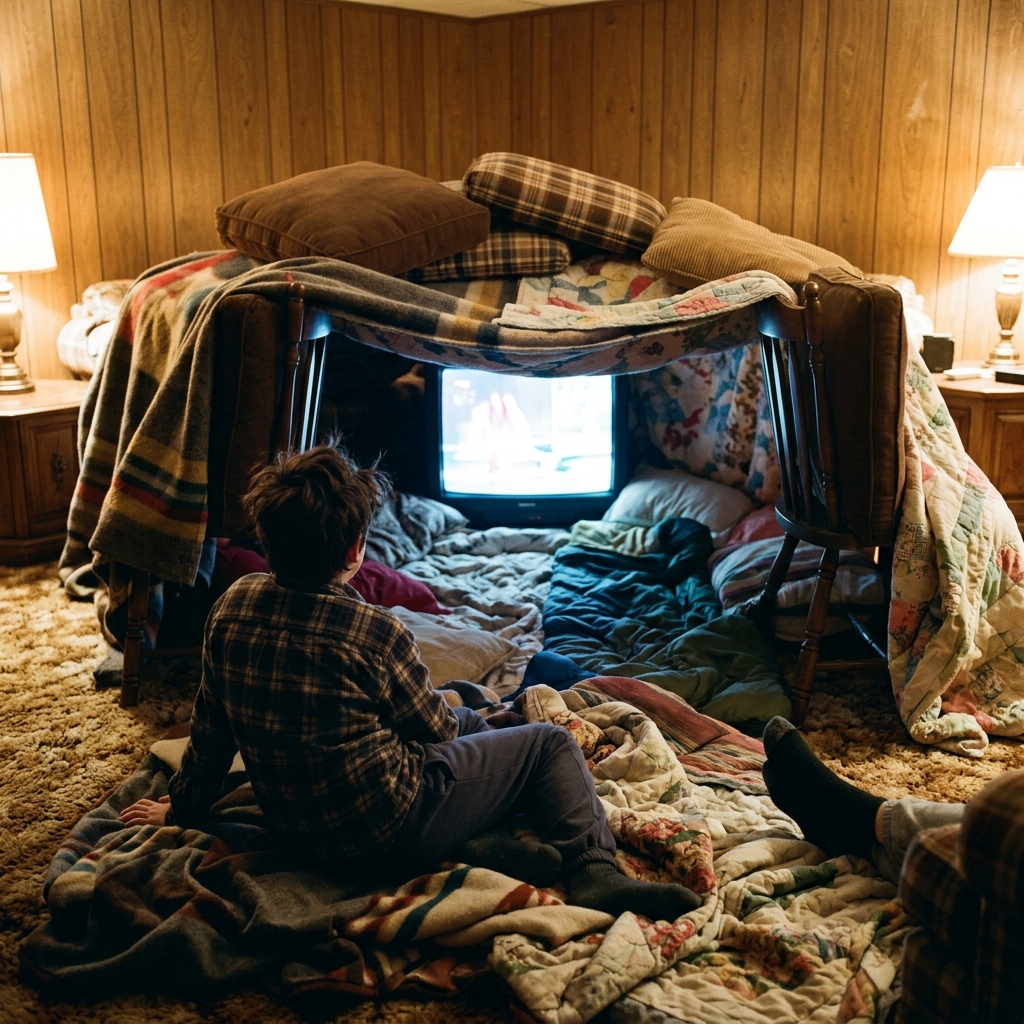
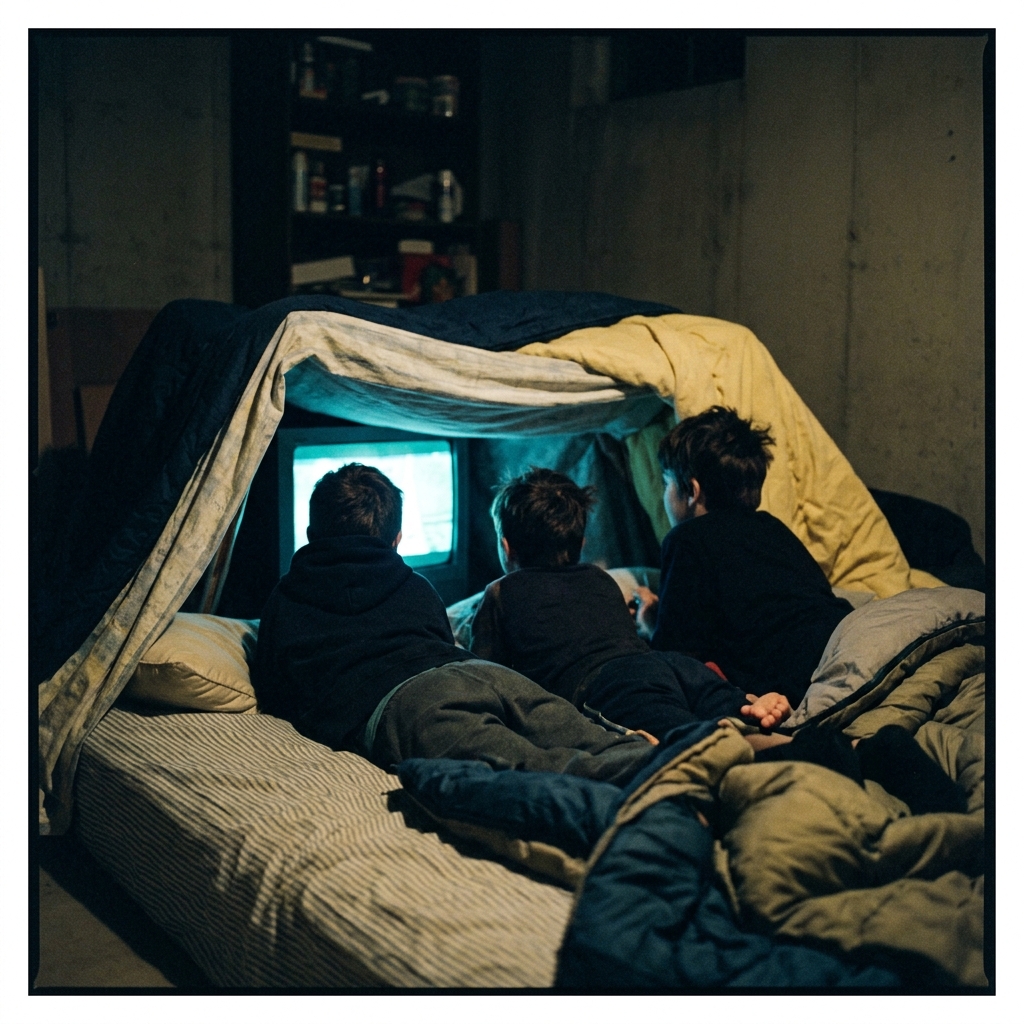
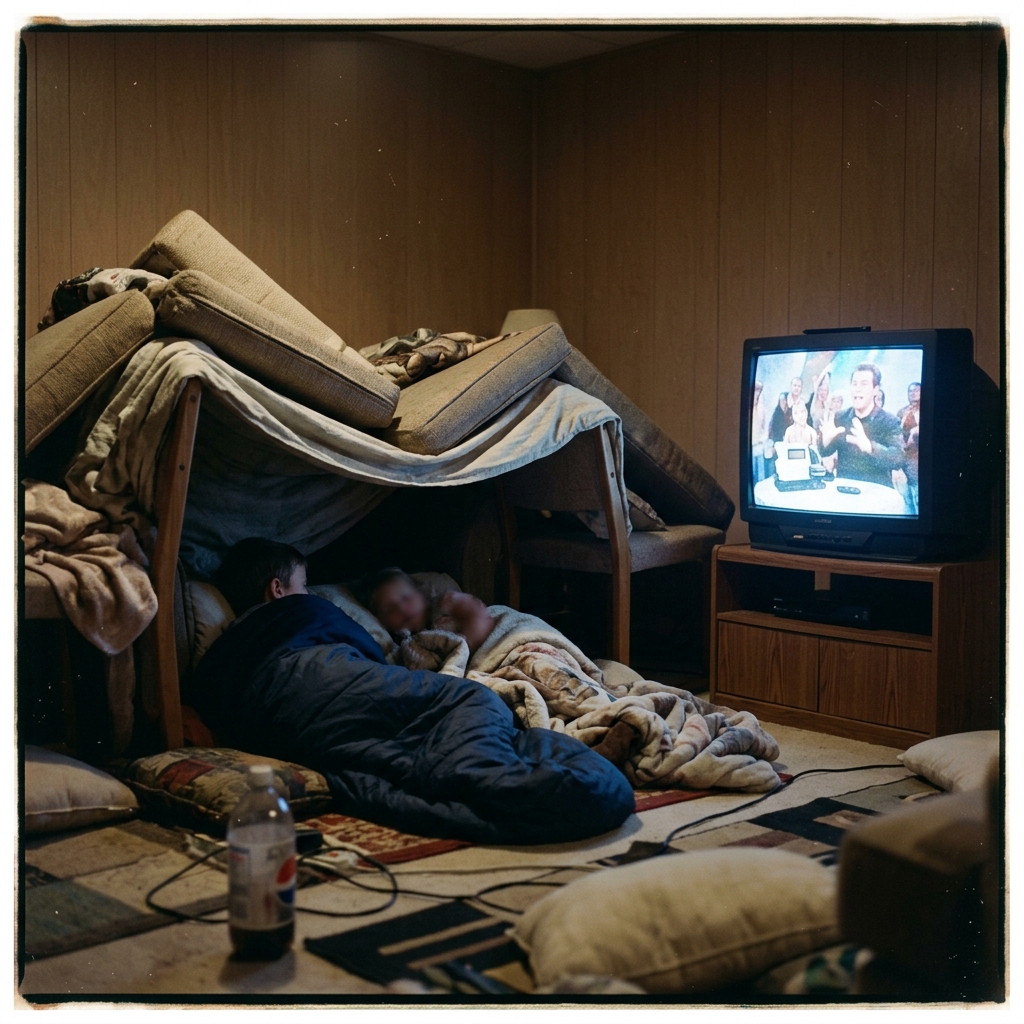
Step 7. The fort. Couch cushions came off the couch. The kitchen chairs were drafted. Every blanket in the linen closet was conscripted. The fort had to enclose the TV. This was non-negotiable. A fort that did not enclose the TV was a tent, and a tent was a lower form. Construction took 45 minutes and produced a structure that would collapse twice before the first movie ended.
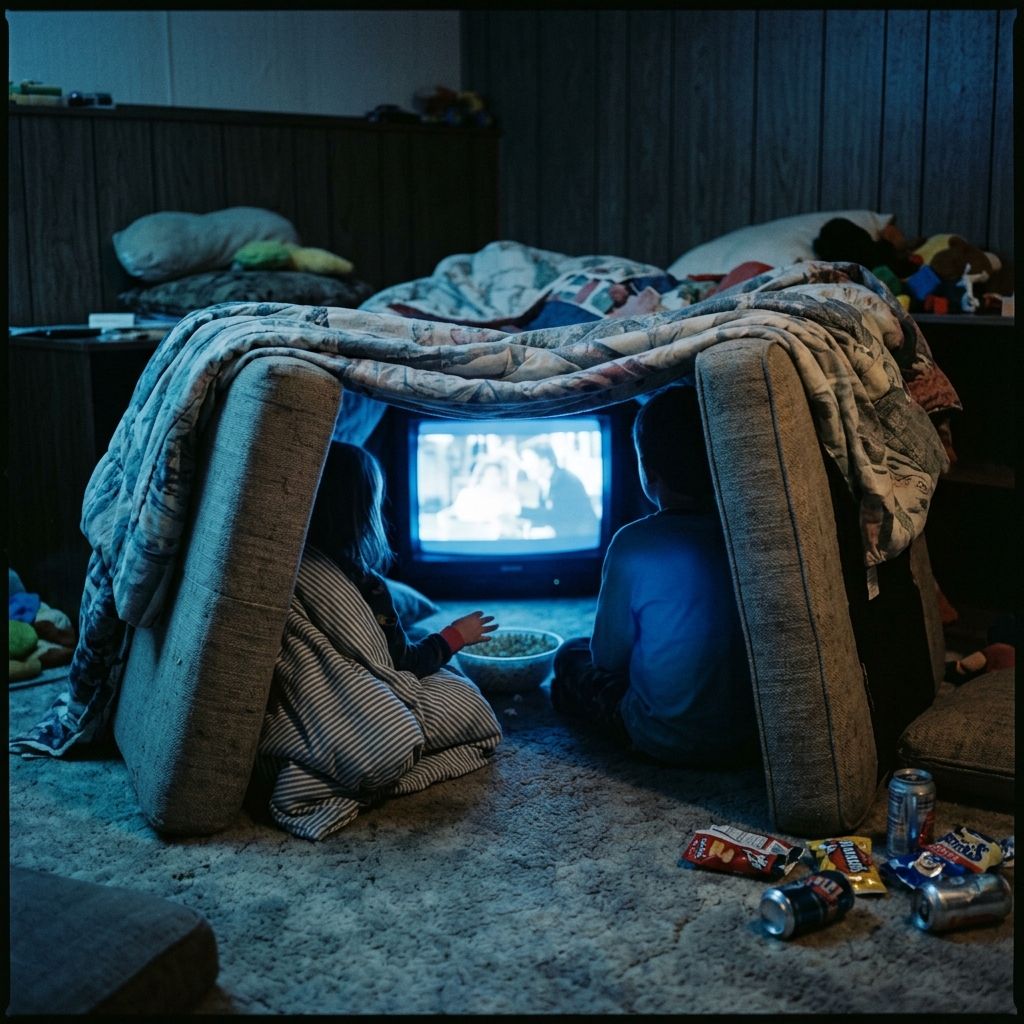
Step 8. The first VHS is a courtesy. Everyone agreed in advance that the safe comedy went first, because the host parent might still come down to check, and the host parent could not see the horror tape. The first movie was watched at 40% attention. People talked over it. Somebody got up for more soda four times. This movie's function was not to be watched. It was to burn down the clock until the host parent went to bed.
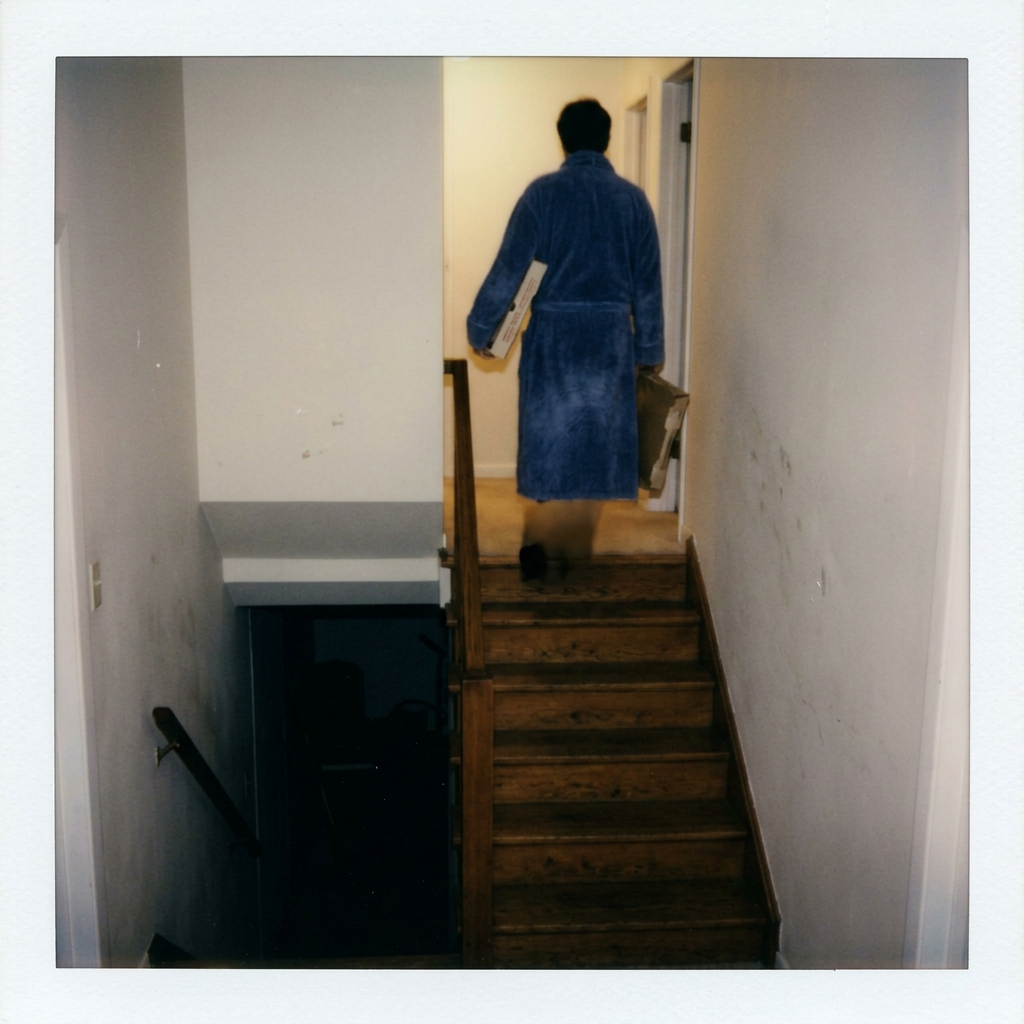
Step 9. The host parent's last appearance. Came downstairs in a robe around 10:30. Said "lights out by midnight," which was the funniest sentence anyone had ever heard. Took the empty pizza box. Did not count the kids. Went upstairs. Did not come back.
Step 10. The horror movie, watched at full attention. Lights off. The fort dimmed. Nobody talked. The horror movie was always worse than expected, in the specific sense that the kids had built it up for two weeks and the actual movie was a 1987 slasher with a budget of $300. It did not matter. The point of the horror movie was not the movie. It was the agreement that you had all seen it together.
Phase 3: Lights Out (but not really)
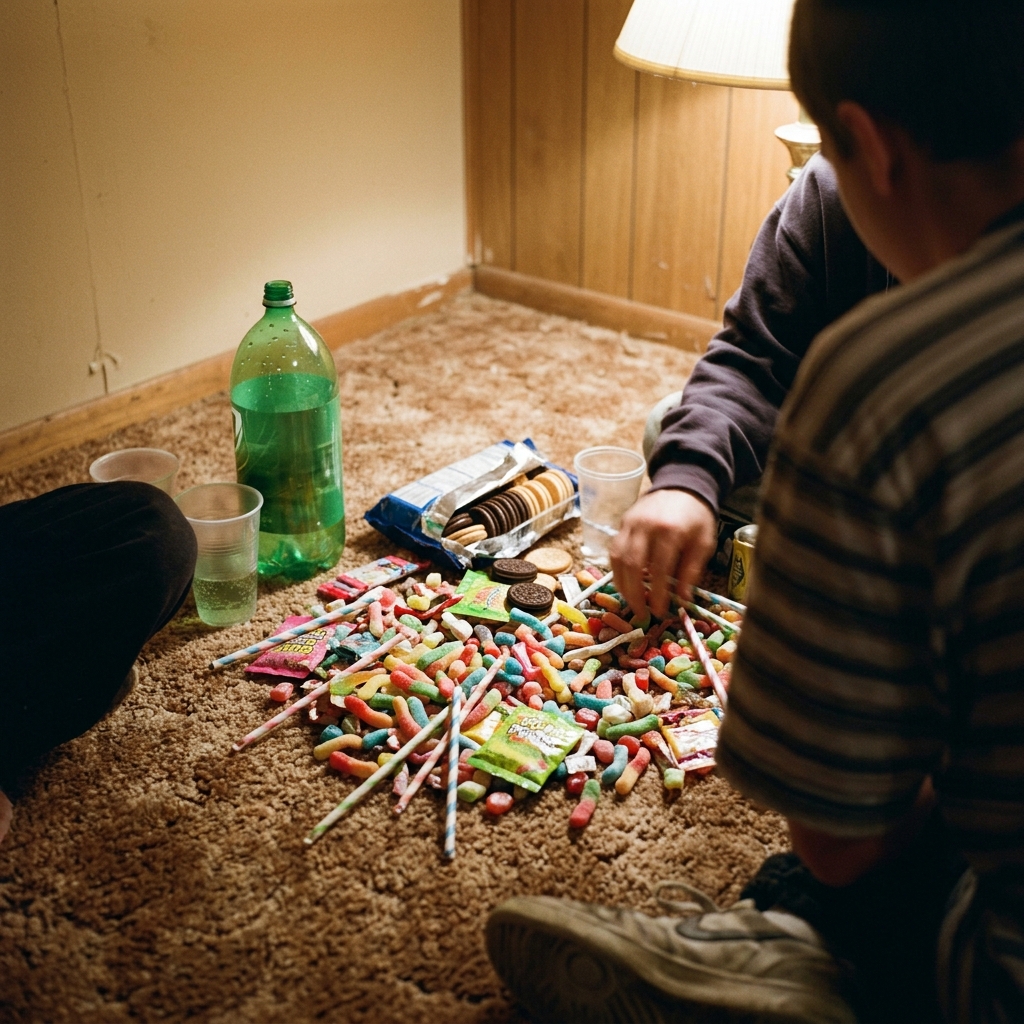
Step 11. The sugar inventory. Around 12:30, somebody produced a backpack-bottom stash: Warheads, a sleeve of Oreos stolen from the host kitchen, a two-liter of generic cola, Pixy Stix. The sugar was not for energy. The sugar was the bridge from the movie phase to the conversation phase. You needed something to do with your hands.
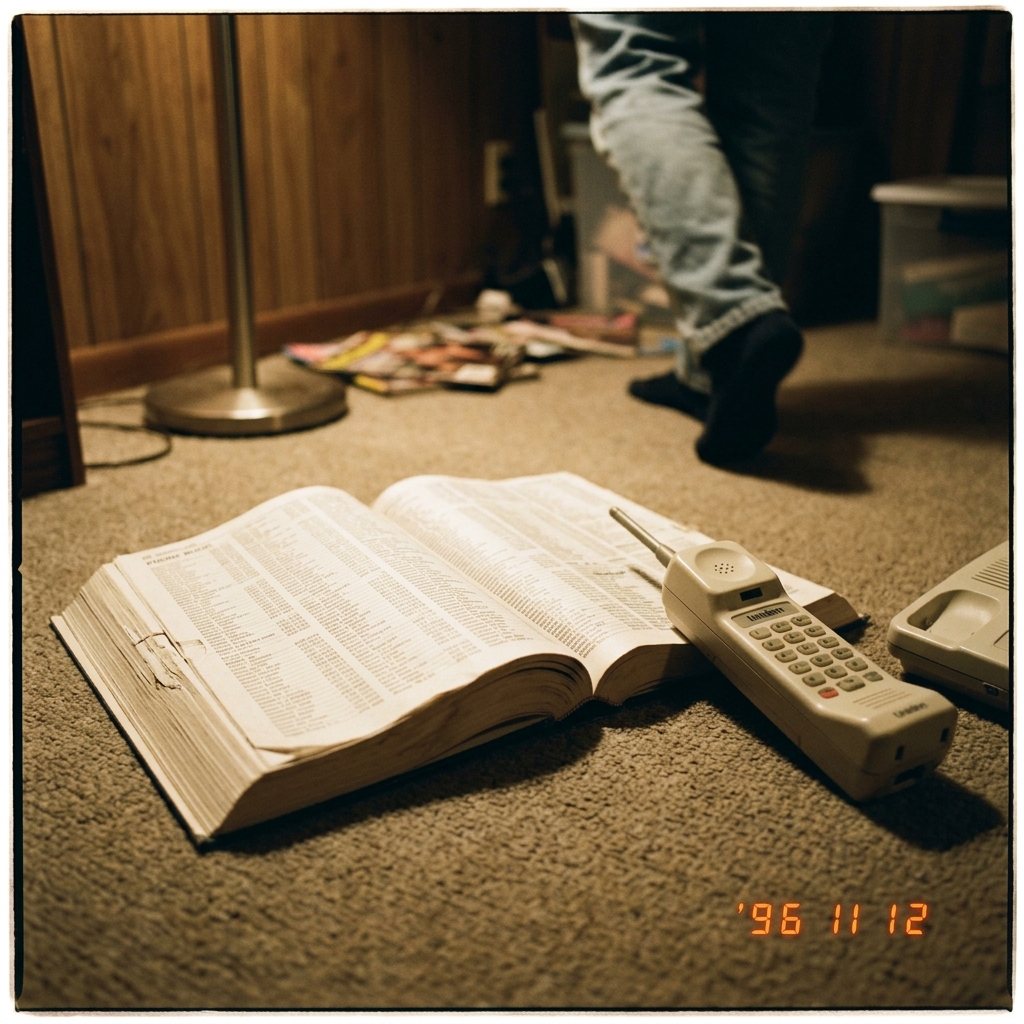
Step 12. The crank call attempt, abandoned. Somebody floated calling a number from the phone book. Somebody else pointed out caller ID, which had ruined the entire genre by 1996. The attempt was discussed for ten minutes and never executed. This was the step most people forget existed. The crank call did not happen in the 90s as often as nostalgia claims — caller ID killed it early, and what actually happened was kids talking about crank calls instead of making them.
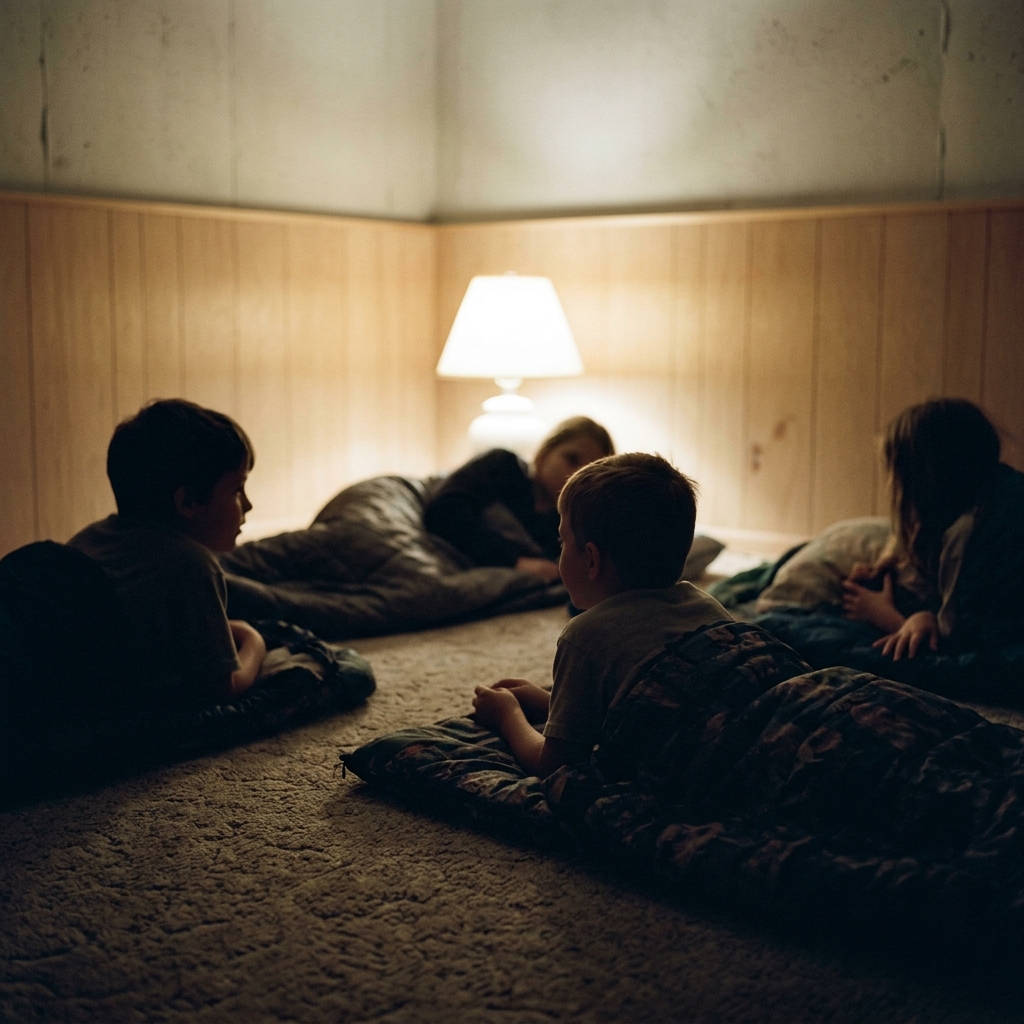
Step 13. The 2am conversation. This was the actual point of the entire ritual. Everything before it — the video store, the pizza, the fort, the horror movie, the sugar — was scaffolding to get four kids to 2am with their guards down. The conversation started with something stupid (which teacher was secretly mean) and ended somewhere honest (which parent was getting divorced, which kid had a crush on a specific person whose name was now under a blood oath). Nobody planned this phase. Nobody could have. It only worked because everybody was tired and nobody's parent was in the room.
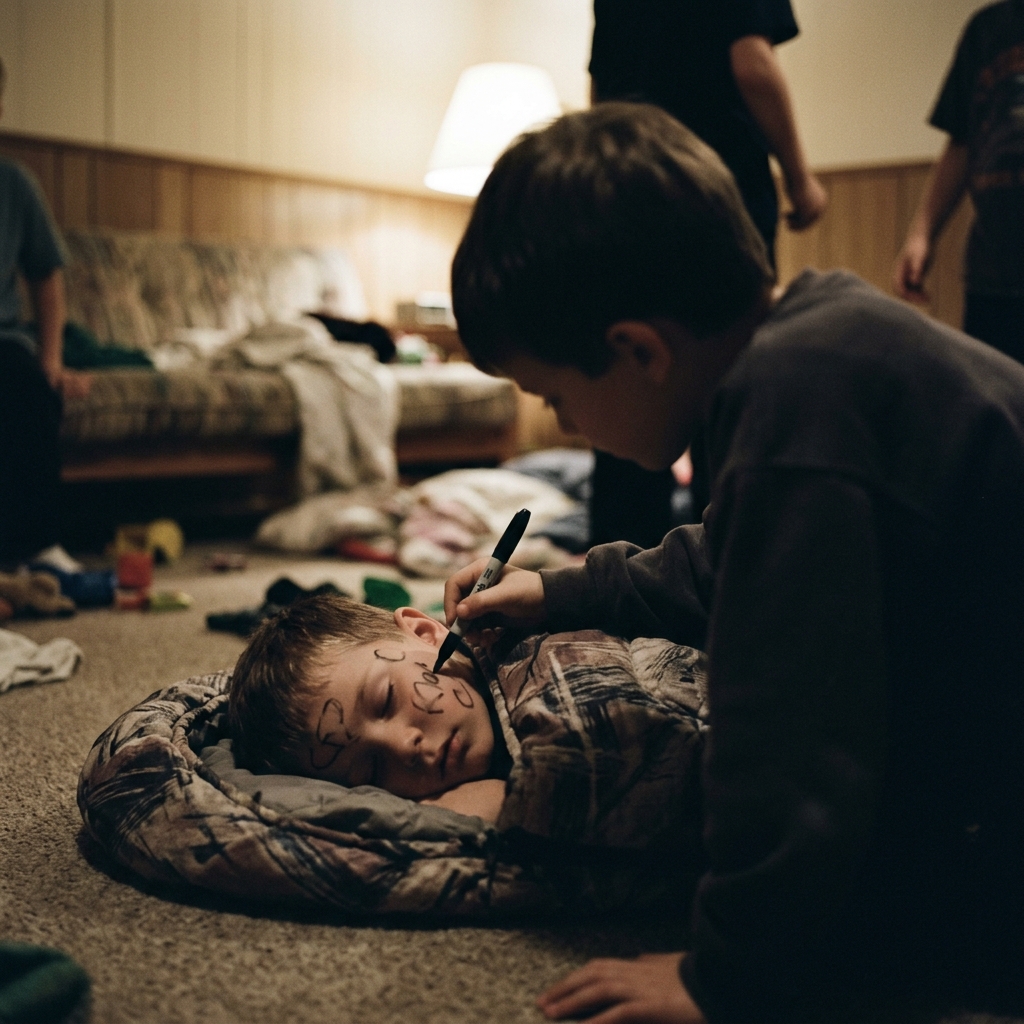
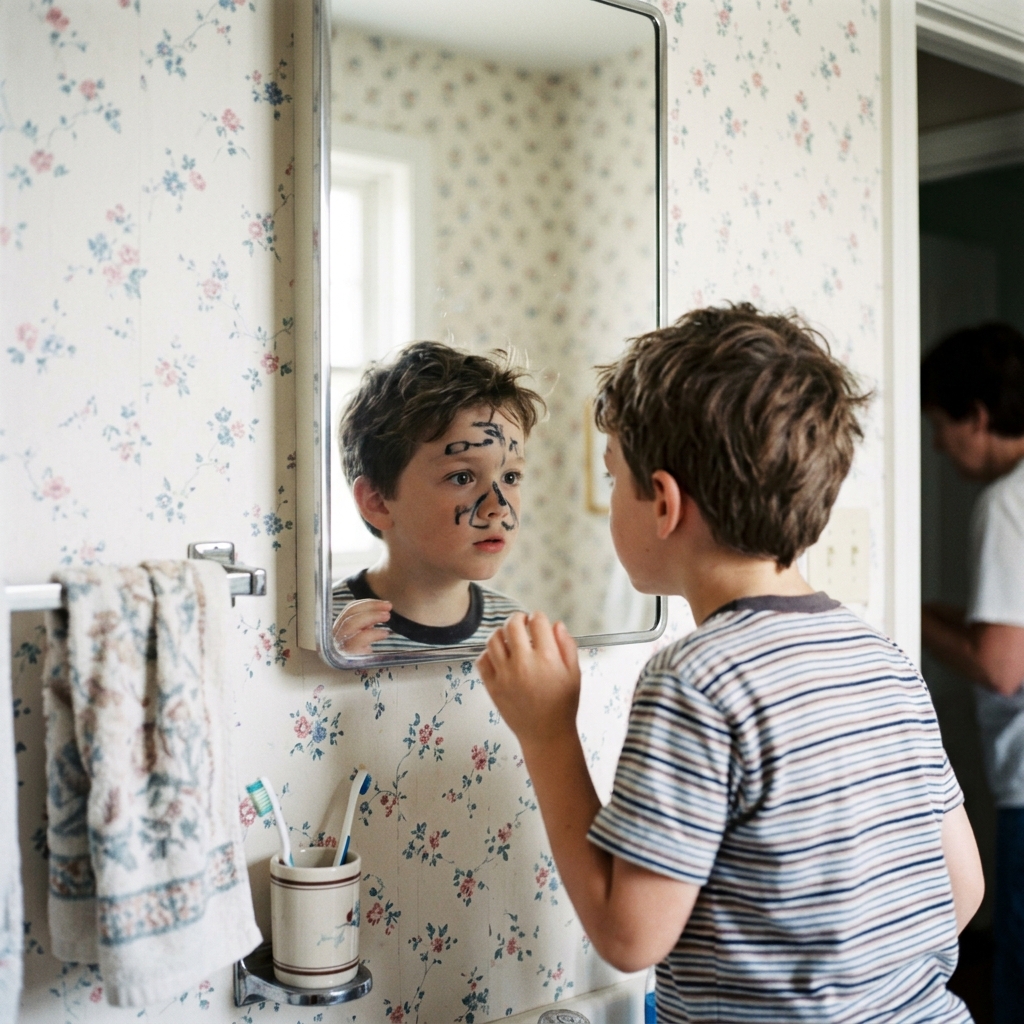
Step 14. The first-asleep tax. One kid always went down before the others. This kid had violated the social contract — the contract was that everyone stayed up until everyone slept — and the tax was applied with a Sharpie. A mustache, a unibrow, the word "POOP" on a forehead. The tax was not cruel. The tax was educational. It taught the kid to pace themselves at the next sleepover.
Step 15. The actual sleep, between 3:45 and 4:20. Not negotiated. Just happened. One kid trailed off mid-sentence. The others followed within ten minutes. Nobody said goodnight. The TV was still on, playing infomercials at a volume nobody had bothered to lower. The fort had already half-collapsed onto somebody's legs.
Phase 4: Morning
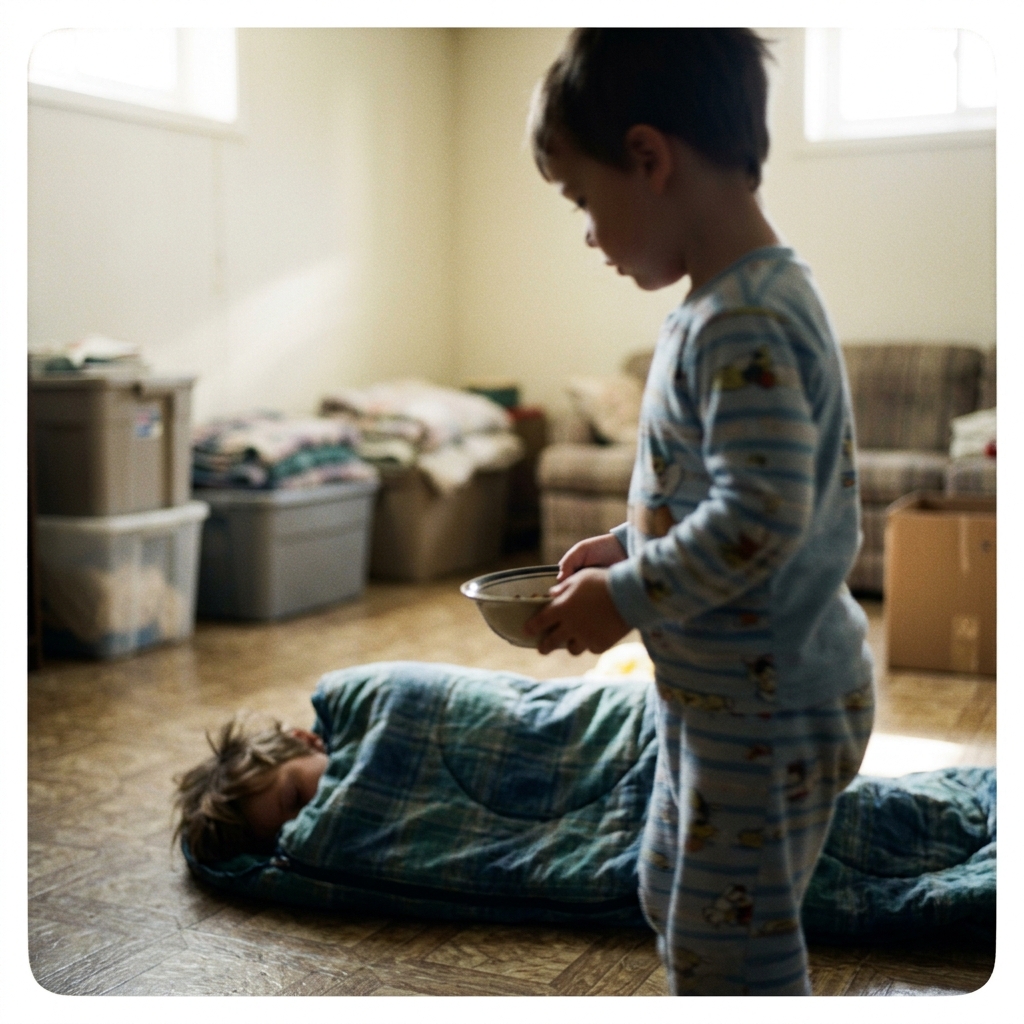
Step 16. The 7:15 wake-up by a younger sibling. The host's little sister or brother, fully dressed, eating cereal, standing two feet from your face. Asking if you wanted to play. The answer was no. The younger sibling did not accept the answer. This was the punishment for staying at someone else's house.
Step 17. The bathroom queue. Four kids, one bathroom, all of them needing it at once. The host kid had priority. Everyone else negotiated. The kid with Sharpie on their face discovered the Sharpie at the mirror and the negotiation broke down entirely.
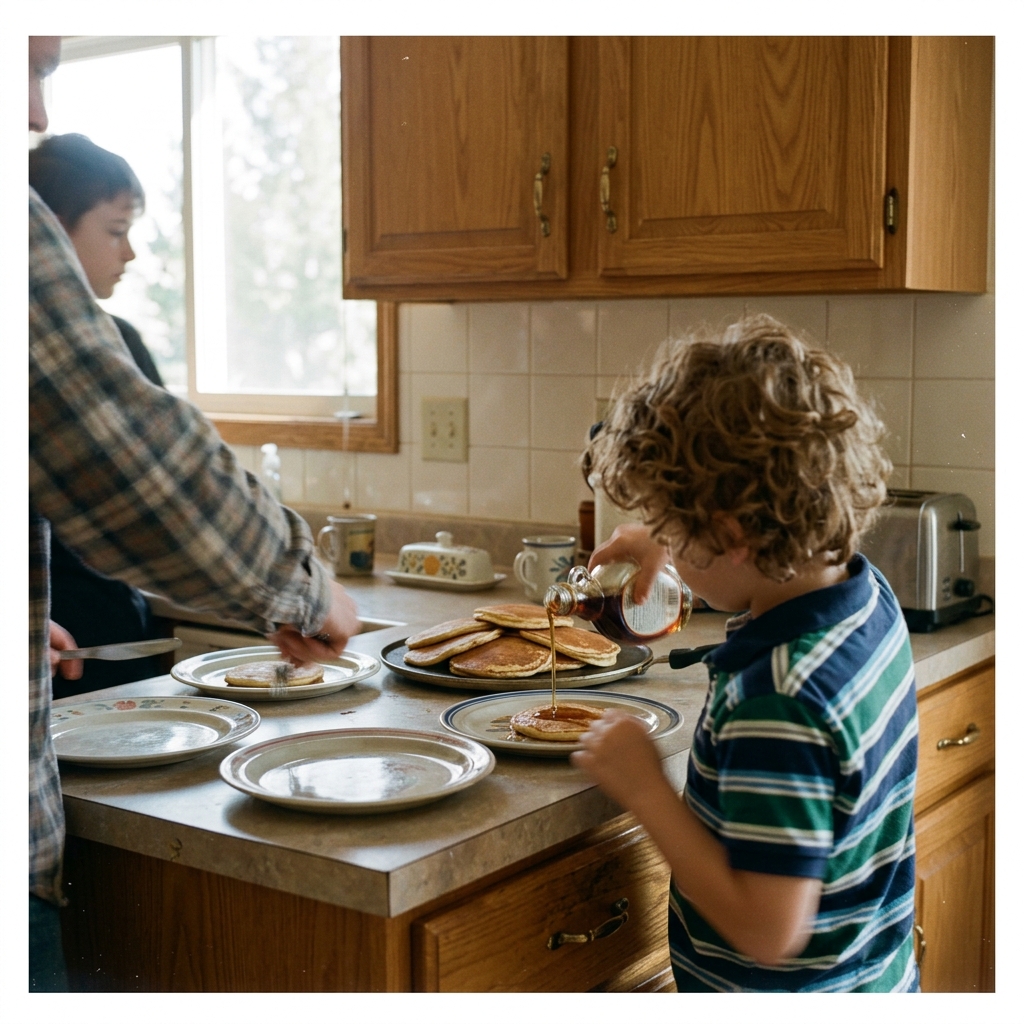
Step 18. The pancake extraction, or the cereal compromise. The best host parents made pancakes. This was the gold standard. It signaled that the night had counted, that the kids were welcome to come back, and that the host parent had not, in fact, slept at all and had heard everything from upstairs. Lesser hosts produced a box of cereal and a gallon of milk on the counter and let it self-serve. The cereal compromise was acceptable but logged.
Step 19. The 10am pickup, executed in pajamas. Your parent pulled into the driveway. You shuffled out in the t-shirt you'd slept in, sleeping bag half-rolled, pillow under one arm, the same configuration as arrival but worse. You did not say a real goodbye to the host kid. You would see them at school in 36 hours. The protocol did not require sentiment.
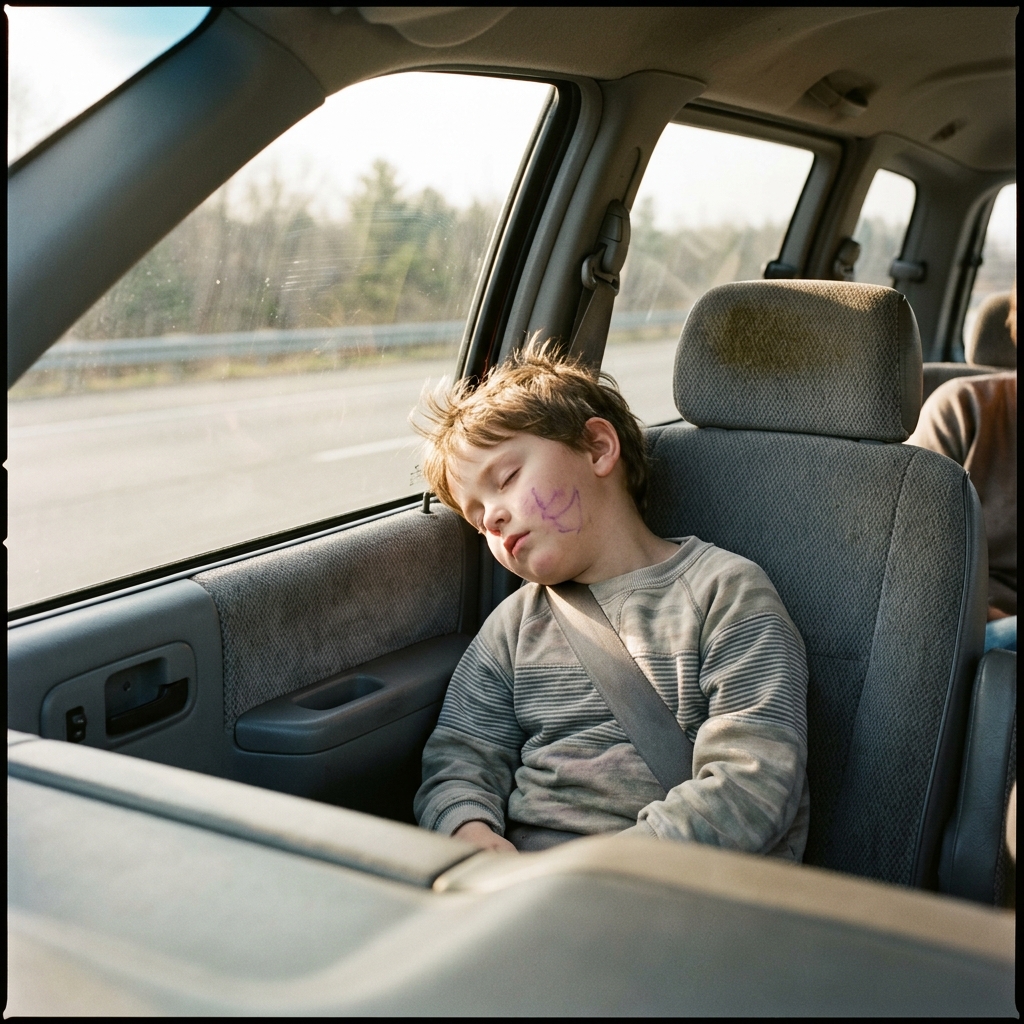
Step 20. The car ride home, silent. Your parent asked how it was. You said "good." You slept against the window for the rest of the ride. The Sharpie would not come off for three days. This was not discussed.
The sleepover protocol existed because no adult in the building was paying attention after 10:30pm. That was the precondition for the entire thing to work. The 2am conversation — the actual point — could not have happened in a household where a parent was checking in every hour. The first-asleep tax could not have been levied under supervision. The horror movie required a video store clerk who did not care and a host parent who did not ask.
What the 90s sleepover taught, on purpose or not, was that four kids in a basement could run their own civilization for nine hours, complete with negotiations, taxes, courts, and confessions. The adults were the infrastructure. The kids were the operating system.
You cannot run this protocol anymore. The video store is gone. Caller ID killed the crank call before it died for real reasons. Group chats moved the 2am conversation to a phone the parent can audit at breakfast. The Sharpie still works, but nobody falls asleep first now because nobody is fully present in the room.
The ritual is in the archive. We've written it down because somebody had to.
🖼️ Hang the protocol on the wall: The 90s Sleepover Rules — print poster
This article is part of a series on the 90s things that didn't survive. See also: The 90s summer kid rules, written down and 37 discontinued 90s snacks, ranked.